
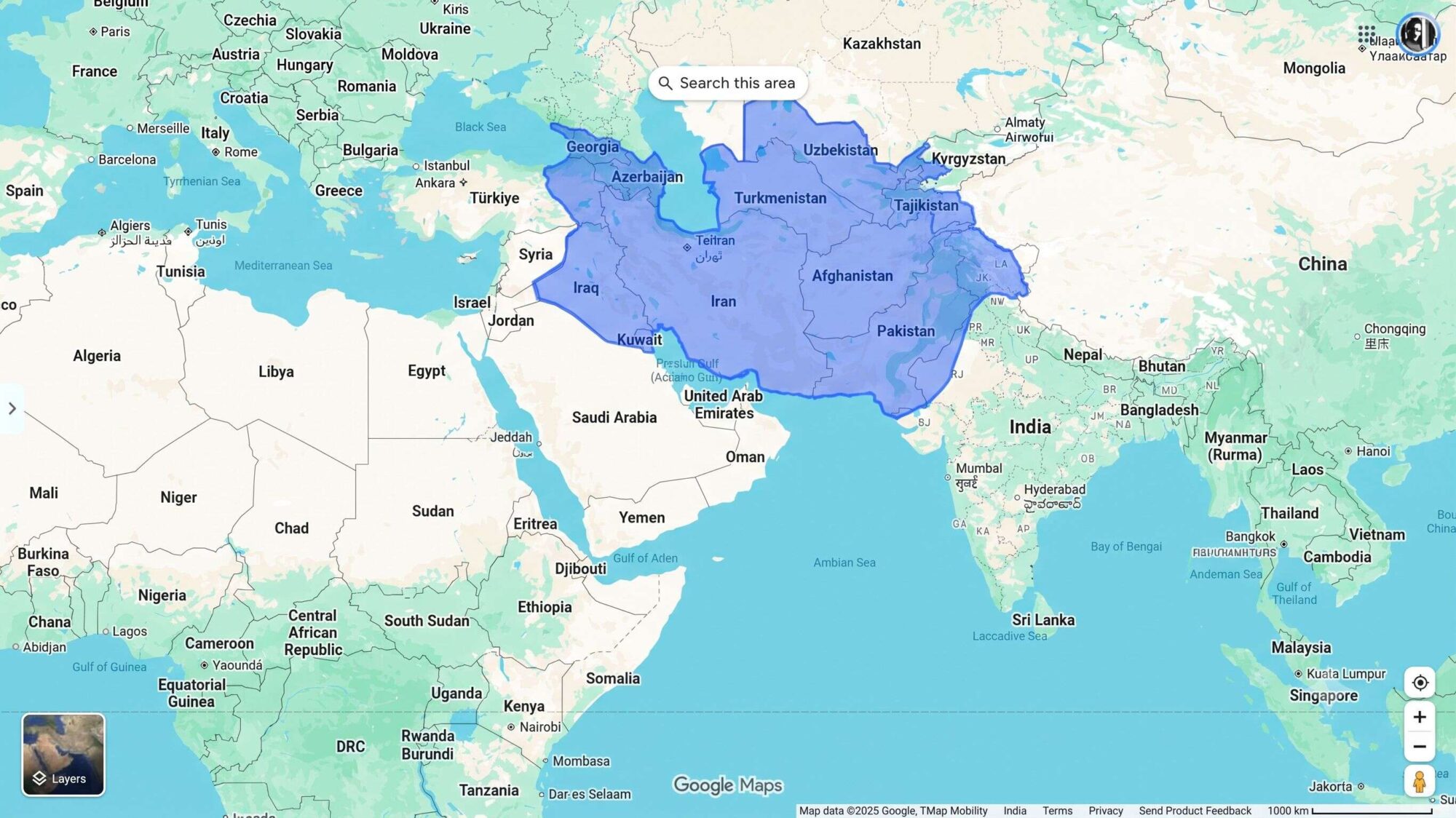
The history of pre-Islamic ancient Persia is defined by three major imperial dynasties: the Achaemenid Empire (First Persian Empire), the Parthian / Arsacid Empire, and the Sasanian Empire (Second Persian Empire).
Below is the chronological table of the rulers of ancient Persia across its primary imperial eras, organized by dynasty with historical estimates of the land area under their control:
1. Achaemenid Empire (c. 559 – 330 BCE)
| No. | Ruler Name | Reign Period | Estimated Land Area Under Reign |
| 1 | Cyrus II (The Great) | 559 – 530 BCE | ~3,500,000 – 4,800,000 km² (Conquered Media, Lydia, Babylon) |
| 2 | Cambyses II | 530 – 522 BCE | ~5,000,000 km² (Conquered Egypt) |
| 3 | Bardiya (Smerdis) | 522 BCE | ~5,000,000 km² |
| 4 | Darius I (The Great) | 522 – 486 BCE | ~5,500,000 km² (Peak territorial extent; Indus to Thrace) |
| 5 | Xerxes I (The Great) | 486 – 465 BCE | ~5,200,000 – 5,500,000 km² |
| 6 | Artaxerxes I | 465 – 424 BCE | ~5,000,000 – 5,200,000 km² |
| 7 | Xerxes II & Sogdianus | 424 – 423 BCE | ~5,000,000 km² |
| 8 | Darius II (Ochus) | 423 – 404 BCE | ~4,800,000 – 5,000,000 km² (Lost Egypt temporarily) |
| 9 | Artaxerxes II (Mnemon) | 404 – 358 BCE | ~4,500,000 – 4,800,000 km² |
| 10 | Artaxerxes III (Ochus) | 358 – 338 BCE | ~5,200,000 km² (Reconquered Egypt) |
| 11 | Artaxerxes IV (Arses) | 338 – 336 BCE | ~5,000,000 km² |
| 12 | Darius III (Codomannus) | 336 – 330 BCE | ~5,000,000 km² → 0 km² (Conquered by Alexander the Great) |
2. Parthian Empire / Arsacid Dynasty (c. 247 BCE – 224 CE)
(Note: Highlighted below are the major monarchs who established and ruled the unified empire.)
| No. | Ruler Name | Reign Period | Estimated Land Area Under Reign |
| 13 | Arsaces I | 247 – 217 BCE | ~250,000 – 350,000 km² (Parthia & Hyrcania) |
| 14 | Arsaces II | 217 – 191 BCE | ~300,000 km² |
| 15 | Phriapatius | 191 – 176 BCE | ~350,000 km² |
| 16 | Phraates I | 176 – 171 BCE | ~400,000 km² |
| 17 | Mithridates I (The Great) | 171 – 132 BCE | ~1,800,000 – 2,200,000 km² (Took Media, Babylon, Elymais) |
| 18 | Phraates II | 132 – 127 BCE | ~2,000,000 km² |
| 19 | Artabanus I | 127 – 124 BCE | ~2,000,000 km² |
| 20 | Mithridates II (The Great) | 124 – 91 BCE | ~2,800,000 km² (Parthian territorial peak) |
| 21 | Gotarzes I & Orodes I | 91 – 75 BCE | ~2,500,000 km² |
| 22 | Sinatruces | 75 – 69 BCE | ~2,400,000 km² |
| 23 | Phraates III | 69 – 57 BCE | ~2,400,000 km² |
| 24 | Orodes II | 57 – 37 BCE | ~2,600,000 km² (Defeated Crassus at Carrhae) |
| 25 | Phraates IV | 37 – 2 BCE | ~2,500,000 km² |
| 26 | Phraataces & Musa | 2 BCE – 4 CE | ~2,400,000 km² |
| 27 | Orodes III & Vonones I | 4 – 12 CE | ~2,400,000 km² |
| 28 | Artabanus II | 12 – 38 CE | ~2,500,000 km² |
| 29 | Vardanes I & Gotarzes II | 38 – 51 CE | ~2,400,000 km² |
| 30 | Vonones II | 51 CE | ~2,400,000 km² |
| 31 | Vologases I | 51 – 78 CE | ~2,600,000 km² |
| 32 | Pacorus II | 78 – 110 CE | ~2,500,000 km² |
| 33 | Osroes I & Parthamaspates | 109 – 129 CE | ~1,800,000 – 2,200,000 km² (Trajan’s Parthian campaign) |
| 34 | Vologases II & Vologases III | 105 – 147 CE | ~2,300,000 km² |
| 35 | Vologases IV | 147 – 191 CE | ~2,400,000 km² |
| 36 | Vologases V | 191 – 208 CE | ~2,200,000 km² |
| 37 | Vologases VI & Artabanus IV | 208 – 224 CE | ~2,000,000 km² → overthrown by Sasanians |
3. Sasanian Empire (224 – 651 CE)
| No. | Ruler Name | Reign Period | Estimated Land Area Under Reign |
| 38 | Ardashir I | 224 – 242 CE | ~2,500,000 – 3,000,000 km² (Founded Sasanian Empire) |
| 39 | Shapur I (The Great) | 240 – 270 CE | ~3,500,000 – 3,800,000 km² (Defeated 3 Roman emperors) |
| 40 | Hormizd I | 270 – 271 CE | ~3,500,000 km² |
| 41 | Bahram I | 271 – 274 CE | ~3,500,000 km² |
| 42 | Bahram II | 274 – 293 CE | ~3,300,000 km² |
| 43 | Bahram III & Narseh | 293 – 302 CE | ~3,100,000 km² (Lost parts of Mesopotamia to Rome) |
| 44 | Hormizd II | 302 – 309 CE | ~3,100,000 km² |
| 45 | Shapur II (The Great) | 309 – 379 CE | ~3,800,000 – 4,000,000 km² (Reconquered eastern & western lands) |
| 46 | Ardashir II & Shapur III | 379 – 388 CE | ~3,700,000 km² |
| 47 | Bahram IV | 388 – 399 CE | ~3,700,000 km² |
| 48 | Yazdegerd I | 399 – 420 CE | ~3,600,000 km² |
| 49 | Bahram V (Bahram Gur) | 420 – 438 CE | ~3,600,000 km² |
| 50 | Yazdegerd II | 438 – 457 CE | ~3,500,000 km² |
| 51 | Hormizd III & Peroz I | 457 – 484 CE | ~3,000,000 – 3,300,000 km² (Hephthalite pressure) |
| 52 | Balash | 484 – 488 CE | ~3,000,000 km² |
| 53 | Kavad I | 488 – 531 CE | ~3,500,000 km² |
| 54 | Khosrow I (Anushirvan) | 531 – 579 CE | ~4,200,000 – 4,500,000 km² (Golden Age; Yemen & Central Asia) |
| 55 | Hormizd IV | 579 – 590 CE | ~4,000,000 km² |
| 56 | Bahram Chobin (Usurper) | 590 – 591 CE | ~3,800,000 km² |
| 57 | Khosrow II (Parvez) | 590 – 628 CE | ~5,400,000 – 5,600,000 km² (Peak; took Egypt, Levant, Anatolia) |
| 58 | Kavad II & Ardashir III | 628 – 630 CE | ~3,500,000 km² (Relinquished conquests to Heraclius) |
| 59 | Boran & Azarmidokht | 630 – 632 CE | ~3,000,000 km² (Civil war period) |
| 60 | Yazdegerd III | 632 – 651 CE | ~3,000,000 km² → 0 km² (Arab conquest of Persia) |
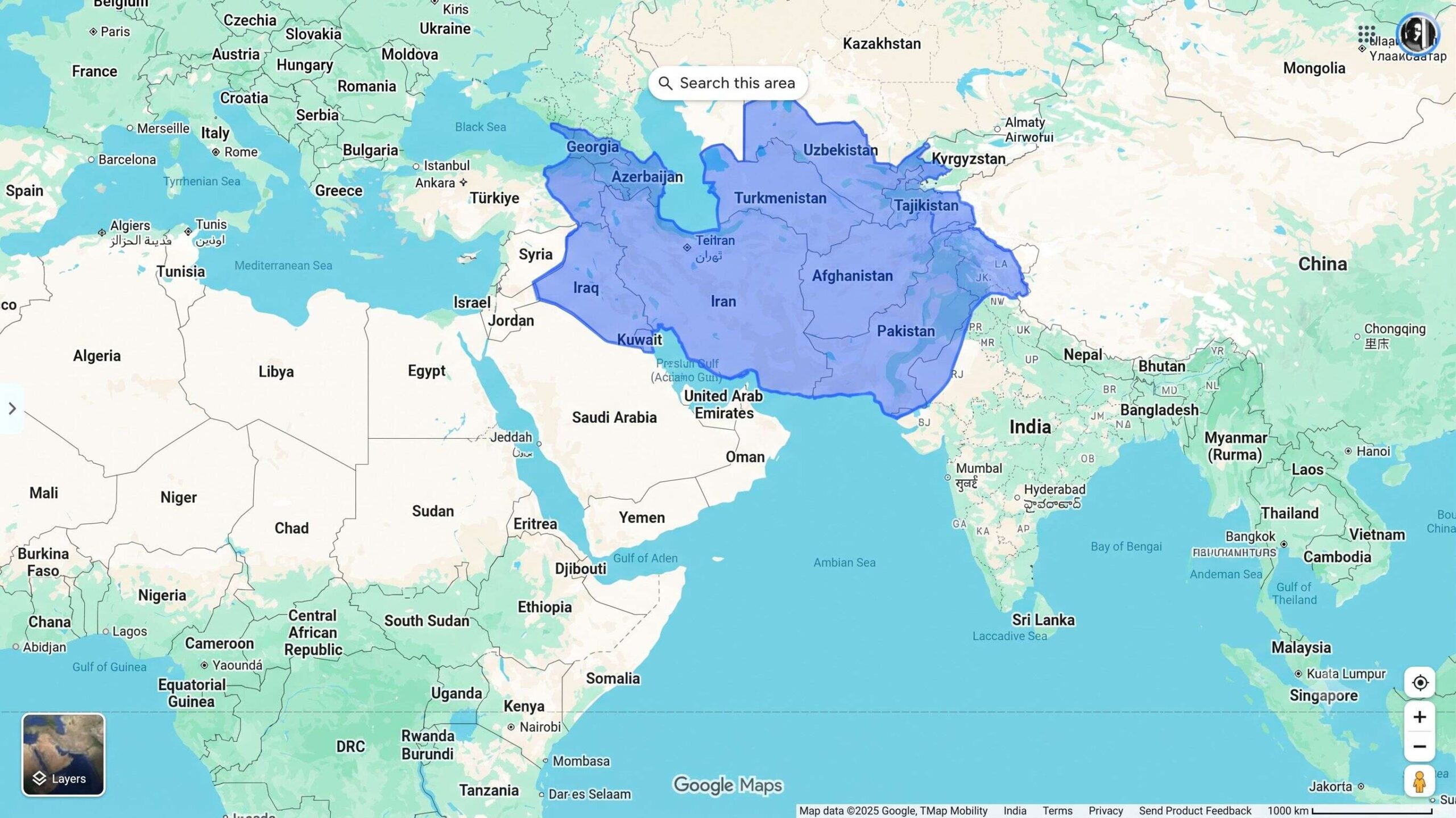
The highlighted region corresponds primarily to the core and eastern imperial territories of the major Persian empires of antiquity, spanning roughly 550 BCE to 651 CE (over 1,200 years):
1. Achaemenid Empire (First Persian Empire): c. 550 BCE – 330 BCE
The Achaemenid Empire (c. 550–330 BCE), also known as the First Persian Empire, was founded by Cyrus the Great after uniting the Medes and Persians, rapidly expanding to become the largest empire the ancient world had ever seen—spanning three continents from the Balkans and Egypt in the west to the Indus Valley in the east. Governed from grand ceremonial capitals like Persepolis and administrative centers like Susa, the empire became legendary for its sophisticated administrative innovations, including the division of lands into provincial governorships (satrapies), standardized taxation, the construction of the vast Royal Road network, and an early courier postal system. Marked by cultural tolerance, respect for local customs and religions (as famously inscribed on the Cyrus Cylinder), and the faith of Zoroastrianism, the empire reached its zenith under Darius the Great and Xerxes I before being conquered by Alexander the Great in 330 BCE.
2. Parthian Empire (Arsacid Empire): c. 247 BCE – 224 CE
A major Iranian power that checked Roman expansion eastward and dominated trade along the Silk Road.
The Parthian Empire also known as the Arsacid Empire, emerged after more than a century of Greek rule following Alexander the Great’s conquest of Persia (330 BCE) and the subsequent rise of the Greek Seleucid Empire. The Parthian Empire (247 BCE – 224 CE), was a major Iranian political and military power founded by Arsaces I after leading the nomadic Parni tribe to conquer the northeastern satrapy of Parthia from the Hellenistic Seleucid Empire. At its height under rulers like Mithridates I and Mithridates II, the empire spanned from the Euphrates River to eastern Iran, becoming a crucial nexus along the Silk Road and the primary geopolitical rival to the Roman Republic and Empire. Governed through a decentralized feudal system dominated by powerful noble houses, the Parthians were famed for their formidable military prowess—especially heavily armored cavalry (cataphracts) and skilled horse archers renowned for the deceptive “Parthian shot”—before dynastic infighting and repeated wars with Rome paved the way for their overthrow by Ardashir I, founder of the Sasanian Empire.
3. Sasanian Empire (Neo-Persian / Second Persian Empire): c. 224 CE – 651 CE
The final pre-Islamic Persian realm – The Sasanian Empire (224–651 CE), known natively as Eranshahr (“Empire of the Iranians”) and regarded as the Neo-Persian or Second Persian Empire, was founded by Ardashir I after he overthrew the Parthian Arsacid dynasty. Ruling from their capital at Ctesiphon on the Tigris, the Sasanians championed a strong, centralized monarchy and established Zoroastrianism as the official state religion, portraying themselves as the true cultural and political heirs of the ancient Achaemenids. Reaching its height under kings like Shapur I, Shapur II, and Khosrow I, the empire was Rome’s and Byzantium’s fiercest rival, renowned for monumental rock reliefs, intricate silver metalwork, complex administrative bureaucracies, and elite armored cavalry (aswaran). Exhausted by centuries of grinding warfare with the Byzantine Empire, the Sasanian realm fractured and ultimately fell to the early Arab Muslim conquests in the mid-7th century.
Modern-Day Countries Included in the Highlighted Area
The highlighted zone encompasses all or substantial parts of the following modern sovereign states and regions:
1. Core Realm (Entirely or Almost Entirely Covered)
- Iran: The historical homeland (Parsa / Persis / Media / Parthia / Elam).
- Afghanistan: Ancient Bactria, Arachosia, Aria, and Drangiana.
- Tajikistan: Ancient Sogdiana and Bactria.
- Turkmenistan: Ancient Margiana, Parthia, and Khwarazm.
- Azerbaijan: Ancient Caucasian Albania and Atropatene.
- Armenia: Ancient Satrapy of Armenia.
2. Major Regions & Borderlands (Substantially Covered)
- Pakistan: The western provinces (Balochistan, Khyber Pakhtunkhwa, and the Indus river basin in Sindh and Punjab, corresponding to the ancient satrapies of Hindush and Gedrosia).
- Uzbekistan: Southern and central territories including the ancient Silk Road oasis kingdoms of Sogdiana (Samarkand, Bukhara) and Khwarazm.
- Iraq: Ancient Mesopotamia (Babylonia and Assyria), which housed imperial Persian winter capitals such as Ctesiphon and Seleucia.
- Georgia: Southern territories historically incorporated into Achaemenid and Sasanian spheres of influence.
- Kuwait: Northern Persian Gulf coastline buffering Mesopotamia and Elam.
- Kyrgyzstan: Southwestern fringes bordering the Fergana Valley.
Prominent Ancient Historical Regions & Capitals
- Persis (Pars): The southwestern homeland of the Persians (modern Fars Province, Iran); home to ceremonial capitals Persepolis and Pasargadae.
- Media: Northwestern Iran around the Zagros Mountains; capital at Ecbatana (modern Hamadan).
- Elam / Susiana: Southwestern plains near modern Khuzestan; capital at Susa (Shush).
- Mesopotamia / Asoristan: The fertile Tigris–Euphrates plain in modern Iraq; imperial administrative seat at Ctesiphon and Babylon.
- Parthia: Northeastern Iran and southern Turkmenistan.
- Bactria: Modern northern Afghanistan, southern Uzbekistan, and Tajikistan; capital at Bactra (Balkh).
- Sogdiana: Transoxiana region (Uzbekistan and Tajikistan) along the Zeravshan River (Samarkand).
- Gedrosia & Carmania: Modern Balochistan (Pakistan/Iran) and Kerman.
- Hyrcania: Southeastern coast of the Caspian Sea (modern Golestan and Mazandaran provinces of Iran).
