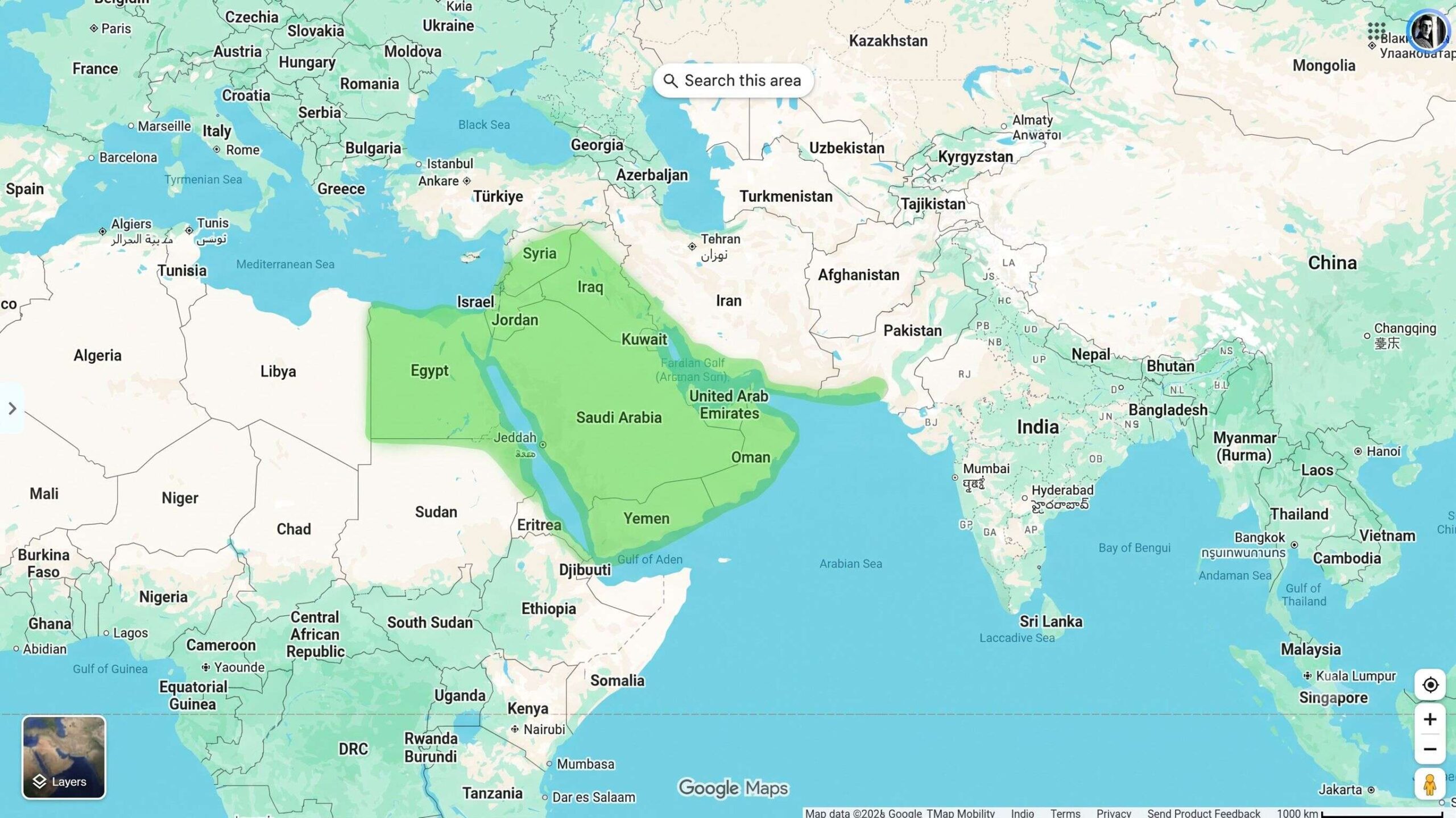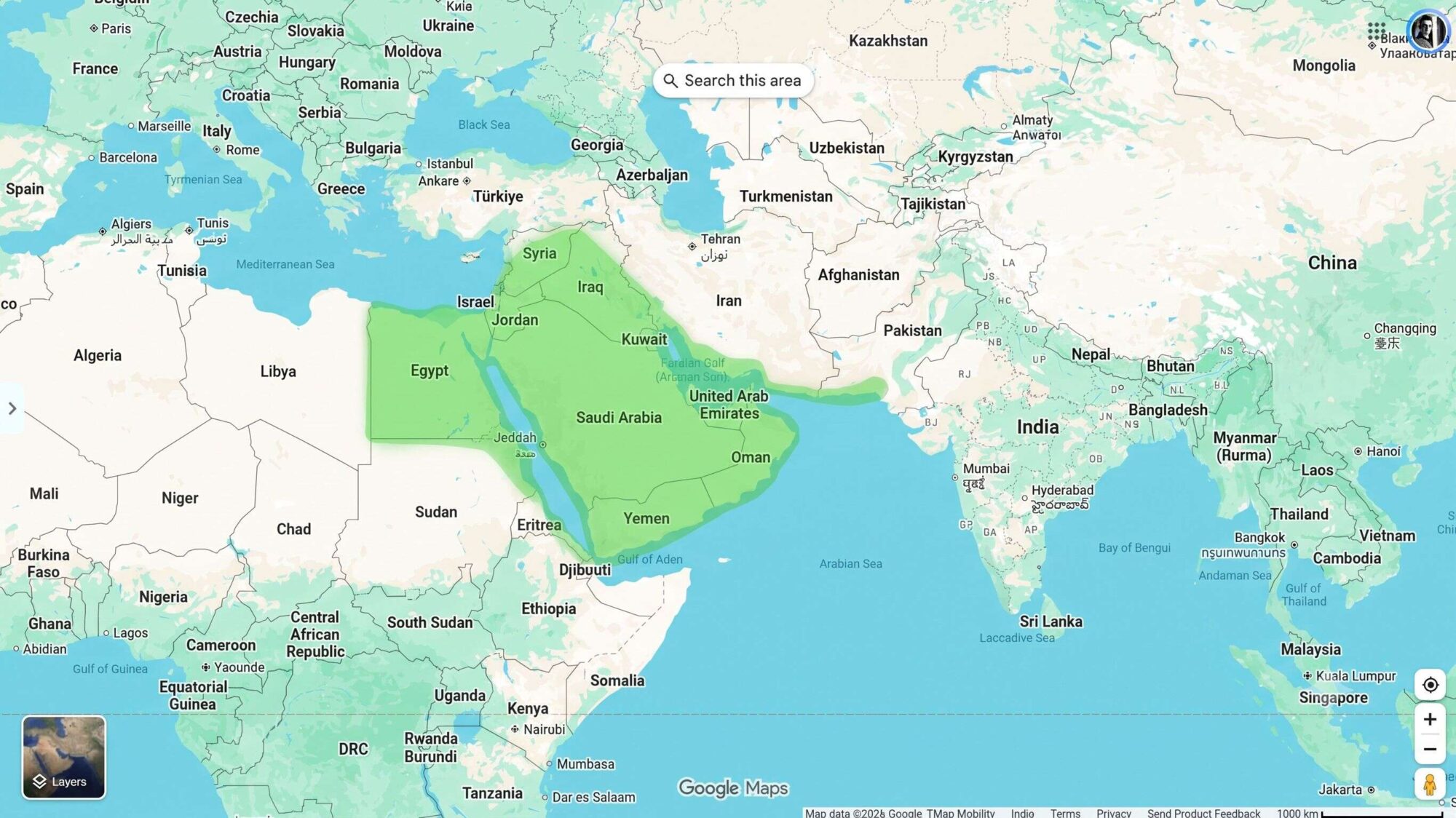
Ancient Arabia (often referred to as Pre-Islamic Arabia) generally spans from around 1200 BCE – 630 CE (the late Bronze/early Iron Age through the rise of Islam in the early 7th century CE).
Its peak classical era—when Greek and Roman geographers documented and interacted extensively with these regions—was between c. 300 BCE and 600 CE.
Classical Greco-Roman Divisions
In antiquity, geographers like Ptolemy and Strabo divided the Arabian realm into three principal regions:
- Arabia Felix (“Fertile / Fortunate Arabia”): The lush, prosperous southern and southwestern rim (modern-day Yemen, Oman, parts of southwestern Saudi Arabia, and southern UAE). Famous for frankincense, myrrh, spices, and maritime trade routes.
- Arabia Petraea (“Stony Arabia / Arabia ruled from Petra”): The northwest region encompassing modern-day Jordan, southern Syria, the Sinai Peninsula (Egypt), the Negev/southern Levant, and northwestern Saudi Arabia. Centered around Petra and later organized as a Roman province.
- Arabia Deserta (“Desert Arabia” or Arabia Magna): The vast, arid interior of the Arabian Peninsula (modern central Saudi Arabia/Najd, Syrian Desert, and the deserts buffering Iraq and Kuwait), inhabited predominantly by nomadic Bedouin tribes.
Ancient Kingdoms, Regions, and Civilizations
The highlighted area corresponds to several prominent ancient kingdoms, city-states, and territories:
1. Southern Arabia (Sayhad / Arabia Felix Civilizations)
- Saba (Sheba) (c. 1000 BCE – 275 CE): Centered in modern Yemen around its capital Ma’rib, famed for the Great Ma’rib Dam and the biblical/Quranic accounts of the Queen of Sheba.
- Himyarite Kingdom (c. 110 BCE – 525 CE): Based in the southern highlands of Yemen (capital Zafar); eventually unified southern Arabia.
- Qataban (c. 4th century BCE – 2nd century CE): Located in the Bayhan valley of Yemen (capital Timna).
- Hadramawt (c. 8th century BCE – 3rd century CE): Eastern Yemen and southern coastal belt (capital Shabwa), central to the frankincense trade.
- Ma’in (Minaean Kingdom) (c. 6th century BCE – 2nd century BCE): Centered in the Jawf basin of Yemen; controlled key overland incense caravan trails.
2. Northern & Northwestern Arabia (Arabia Petraea & Deserta borders)
- Nabataean Kingdom (c. 3rd century BCE – 106 CE): Covered modern Jordan, southern Israel/Palestine, Sinai (Egypt), and northwest Saudi Arabia; ruled from Petra and Hegra (Al-Hijr / Mada’in Salih).
- Kingdom of Qedar (c. 9th – 4th century BCE): A powerful confederation across the Syrian/North Arabian desert into the southern Levant and Sinai.
- Dedan & Lihyan (c. 7th – 1st century BCE): Ancient oasis civilizations centered in the valley of Al-Ula (northwestern Saudi Arabia).
- Midian: Biblical and historical northwest coastal/mountain region along the eastern shore of the Gulf of Aqaba and northern Red Sea.
- Ghassanids & Lakhmids (c. 3rd – 7th century CE): Arab client kingdoms acting as buffers for the Byzantine Empire (Ghassanids in the Levant/Syrian desert) and the Sasanian Persian Empire (Lakhmids centered at Al-Hirah in modern Iraq).
3. Central & Eastern Arabia
- Kindah (Kinda) (c. 4th – 6th century CE): A tribal confederacy dominating central Arabia (Najd), with its capital at Qaryat al-Faw.
- Dilmun (c. 3rd millennium – 1st millennium BCE): Centered around modern Bahrain, Kuwait, and eastern Saudi Arabia (al-Ahsa/Qatif); prominent maritime trading hub connecting Mesopotamia and the Indus Valley.
- Magan (Makkan) (c. 2300 – 550 BCE): Ancient copper and diorite trading region covering present-day Oman and the United Arab Emirates.
- Gerrha (c. 3rd century BCE – 3rd century CE): A wealthy merchant city-state on the Persian Gulf coast in eastern Arabia.