

The Mamluk Dynasty of the Delhi Sultanate (1206–1290 CE)
Overview
The Mamluk dynasty, also known as the Slave dynasty or Ghulam dynasty, was the first ruling dynasty of the Delhi Sultanate in northern India. It governed from 1206 to 1290 CE, establishing the foundations of a new political order following the decline of Ghurid authority in the Indian subcontinent.
The dynasty was founded by Qutb Ud Din Aibak, a Turkic military commander who had previously served Muhammad of Ghor. Its rulers strengthened the sultanate through military expansion, administrative consolidation, and architectural patronage.
Core Details
Category | Details |
|---|---|
Dynasty | Mamluk dynasty |
Alternative names | Slave dynasty, Ghulam dynasty |
Period | 1206–1290 CE |
Region | Northern India |
Capital | Delhi, with political authority also centred at other important cities during the period |
Founder | Qutb Ud-Din Aibak |
Predecessor | Ghurid Empire’s authority in northern India |
Successor | Khalji dynasty |
Historical significance | Established the first dynasty of the Delhi Sultanate |
Origin of the name: The Arabic word mamluk means “owned” and refers to a person held in slavery. In medieval Islamic societies, some enslaved individuals received military training and rose to positions of considerable political and military authority. Several Mamluk rulers of Delhi originated from this military background.
Ruling Periods and Subdivisions
The dynasty is commonly divided into three successive ruling groups.
Ruling group | Period | Notable ruler |
|---|---|---|
Qutbi dynasty | 1206–1211 CE | Qutb Ud-Din Aibak |
First Ilbari or Shamsi phase | 1211–1266 CE | Iltutmish |
Second Ilbari phase | 1266–1290 CE | Balban |
These subdivisions reflect changes in political leadership and the military elite that dominated the sultanate. They should be understood as historical classifications rather than three entirely separate dynasties.
Major Rulers
1. Qutb Ud-Din Aibak
Reign: 1206–1210 CE
Qutb Ud-Din Aibak founded the Mamluk dynasty after the death of Muhammad of Ghor in 1206. Previously a Ghurid military commander, he established an independent political authority in northern India.
- Laid the foundation of the Delhi Sultanate under an independent ruler.
- Initiated the construction of the Qutb Minar in Delhi.
- His reign was relatively short, and the consolidation of the sultanate remained incomplete.
2. Shams Ud-Din Iltutmish
Reign: 1211–1236 CE
Iltutmish was the most important consolidator of the early Delhi Sultanate. He strengthened the monarchy and expanded its authority over important territories in northern India.
- Consolidated the political foundations of the sultanate.
- Developed the iqta system, through which officials and military commanders received revenue assignments in return for service.
- Standardized the silver tanka and copper jital monetary system.
- Managed the Mongol threat during the westward expansion of the Mongol Empire.
- Continued the development of the Qutb Minar complex.
3. Razia Sultan
Reign: 1236–1240 CE
Razia Sultan, daughter of Iltutmish, became ruler after a succession struggle. She is notable for being the first and only woman to rule the Delhi Sultanate in her own right.
- Attempted to exercise direct royal authority over the military and administrative elite.
- Faced opposition from powerful Turkic nobles.
- Was overthrown in 1240, after a reign marked by political and military conflict.
4. Ghiyas Ud-Din Balban
Reign: 1266–1287 CE
Balban strengthened the authority of the monarchy and sought to restore order after decades of aristocratic rivalries and political instability.
- Reinforced royal authority and court discipline.
- Strengthened the military and intelligence apparatus.
- Suppressed rebellions and regional challenges to the sultanate.
Defended the northwestern frontier against Mongol incursions.
His reign represented an important phase of centralization, although the dynasty weakened after his death.
Major Contributions and Legacy
1. Architecture
The Mamluk rulers helped establish an Indo-Islamic architectural tradition in northern India. Their building projects combined Islamic architectural forms with locally available materials, craftsmanship, and construction practices.
The most prominent example is the Qutb Minar complex, whose development began under Aibak and continued under subsequent rulers, particularly Iltutmish.
2. Administration and Revenue
The dynasty contributed to the development of a more centralized political and administrative structure.
- Iqta system: Revenue assignments supported military commanders and administrators in exchange for service to the state.
- Central monarchy: Iltutmish and Balban strengthened the sultan’s authority over competing nobles.
- Military organization: The rulers maintained forces to defend the sultanate, suppress rebellions, and protect its frontiers.
These institutions evolved over time and were further developed by later Delhi Sultanate dynasties.
3. Monetary System
Iltutmish is associated with the establishment of a more standardized monetary system, particularly the silver tanka and copper jital. These coins helped facilitate taxation, military payments, and commercial transactions.
For rigorous historical research, numismatic evidence—surviving coins, inscriptions, weights, and mint information—is particularly valuable for investigating these developments.
Decline and End of the Dynasty
The Mamluk dynasty experienced recurring succession disputes, conflicts among powerful nobles, and difficulties maintaining centralized authority. Although Balban strengthened the monarchy, political instability increased after his death in 1287.
The dynasty ended in 1290 CE, when Jalal al-Din Firuz Khalji established the Khalji dynasty, marking the beginning of the second ruling dynasty of the Delhi Sultanate.
Important Historical Distinction
The Mamluk dynasty of Delhi should not be confused with the Mamluk Sultanate of Egypt and Syria, which was a separate political entity. Both were associated with military elites whose members included people of enslaved origin, but they developed in different regions and had distinct political histories.
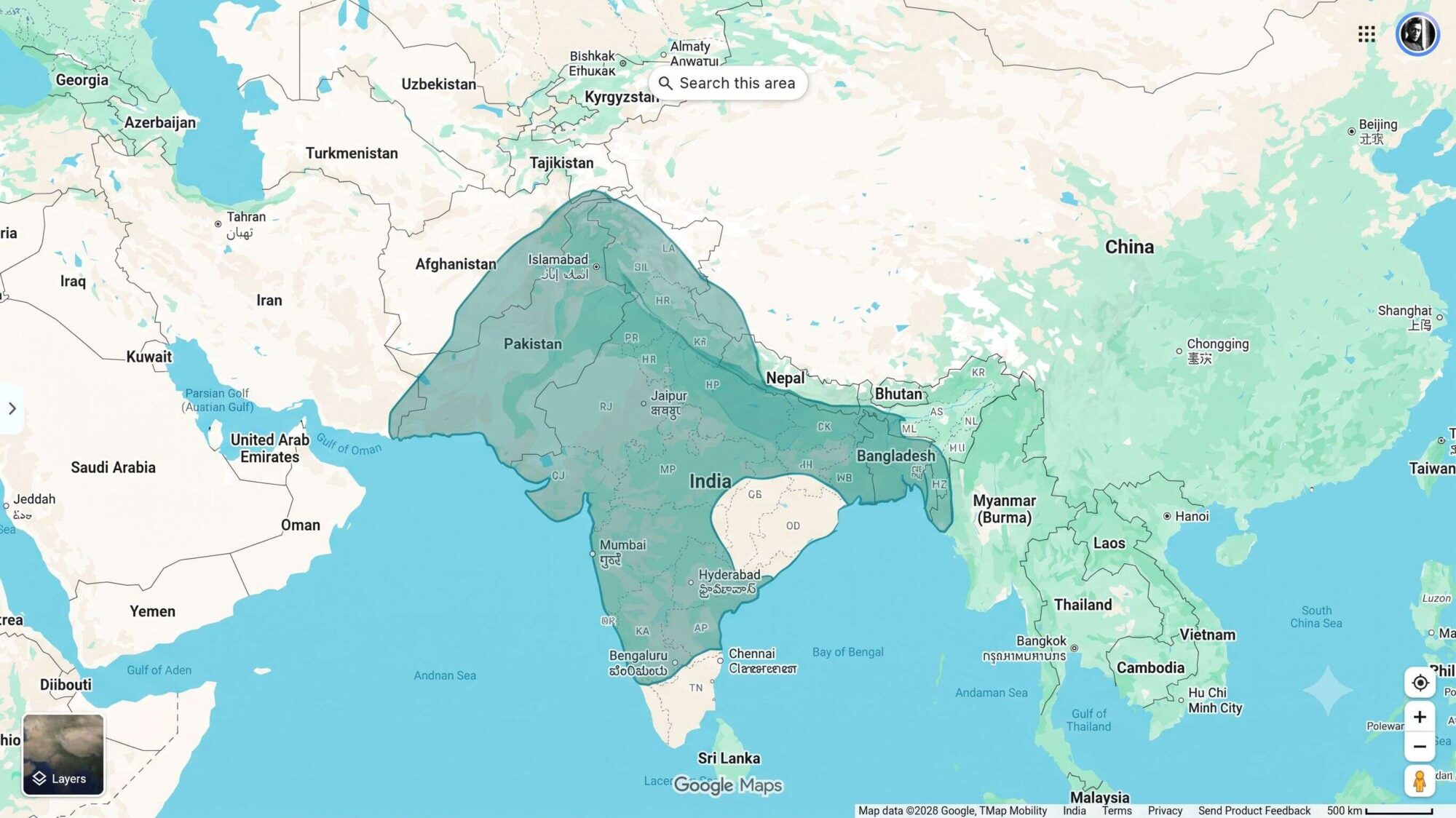
1. Major Regions and Administrative Centres
Region | Important centres | Historical significance |
|---|---|---|
Punjab | Lahore, Multan | Strategic northwestern region connecting the Sultanate with Afghanistan and the routes exposed to Mongol incursions. |
Delhi and the Ganga–Yamuna Doab | Delhi, Badaun | The political and administrative heartland of the Sultanate, supporting royal government, agriculture, and revenue collection. |
Bengal and Bihar | Lakhnauti, Bihar | Eastern territories brought under Ghurid and Delhi Sultanate authority, but frequently affected by provincial rebellions and semi-independent governors. |
Sindh | Lower Sindh and associated frontier settlements | A strategically important western region where political control varied and local rulers and governors influenced the extent of Sultanate authority. |
Rajasthan | Ajmer, Bayana, Nagaur | Important military and strategic centres involved in campaigns against regional Rajput powers and in securing routes across northern India. |
Gwalior and Kalinjar | Gwalior Fort, Kalinjar Fort | Fortified strongholds in central India that were targeted during campaigns to extend or reassert the Sultanate’s authority. |
2. Important Historical Qualification
These regions should not be interpreted as uniformly administered provinces under continuous central control throughout 1206–1290 CE.
- Punjab: Lahore and Multan were strategically important, but the northwestern frontier remained vulnerable to Mongol pressure.
- Bengal and Bihar: Authority from Delhi was particularly unstable in the east, where governors sometimes asserted independence.
- Rajasthan: Control over strategic towns and forts did not necessarily mean complete control over the surrounding region.
- Gwalior and Kalinjar: Military victories and temporary occupations should be distinguished from permanent territorial incorporation.
- Sindh: The degree of direct control requires region-specific evidence and should not be assumed to have been consistent throughout the dynasty’s existence.

The Khalji Dynasty (1290–1320 CE)
1. Introduction
The Khalji dynasty, also spelled Khilji, was the second ruling dynasty of the Delhi Sultanate, governing northern India and expanding its influence into central and southern India between 1290 and 1320 CE. The Khaljis were of Turkic origin, but their ancestors had lived in Afghanistan for generations, where they adopted regional customs and cultural influences. Consequently, historians often describe the dynasty as Turco-Afghan. Its founder, Jalal al-Din Firuz Khalji, had served the preceding Mamluk rulers before establishing his own dynasty. The Khaljis are particularly remembered for the military campaigns, territorial expansion, economic reforms, and strengthened central administration introduced during the reign of Alauddin Khalji.
How the Khaljis Seized Power from the Mamluks
The Mamluk dynasty weakened following the death of Sultan Balban in 1287 CE, as succession disputes and rivalries among nobles destabilized the government. Balban’s successors, including Muiz al-Din Kaiqubad, struggled to maintain their authority. Jalal al-Din Firuz Khalji, an experienced military commander, emerged as a powerful contender. In 1290, the Khaljis displaced the Mamluk ruling house and established a new dynasty. This transition is often called the Khalji Revolution, as it also represented a shift in the composition of the ruling elite.
Rulers of the Khalji Dynasty
Reigning period | Ruler | Key significance during the reign |
|---|---|---|
1290–1296 CE | Jalal al-Din Firuz Khalji | Founded the Khalji dynasty after the fall of the Mamluks. Pursued a comparatively conciliatory approach towards political opponents and consolidated the new ruling house. |
1296–1316 CE | Alauddin Khalji | The dynasty’s most powerful ruler. Expanded the Sultanate into Gujarat, Rajasthan, Malwa and the Deccan; repelled Mongol invasions; introduced major military, market and revenue reforms. |
1316 CE | Shihab al-Din Omar | A child ruler who briefly occupied the throne after Alauddin’s death under the influence of Malik Kafur. His reign was marked by court struggles. |
1316–1320 CE | Qutb al-Din Mubarak Shah | Removed the regency, reasserted royal authority and campaigned to restore control over the Deccan, particularly Devagiri. His reign ended amid a palace conspiracy. |
1320 CE | Nasir al-Din Khusrau Shah | Seized power after Mubarak Shah’s assassination. His brief rule ended when Ghazi Malik defeated him and established the Tughlaq dynasty. |
Note: Khusrau Shah’s inclusion explains the transition in 1320. Some historical lists use different titles or spellings for him.
Key Achievements and Reforms
Most of the Khalji dynasty’s major achievements occurred during Alauddin Khalji’s reign.
– Territorial expansion: Extended the Sultanate’s authority across much of northern and central India, including Gujarat, Ranthambore, Chittor, Malwa, Siwana and Jalore.
– Southern military campaigns: General Malik Kafur led expeditions against Devagiri, Warangal, Dwarasamudra and the Pandya kingdom around Madurai. Several southern rulers were compelled to pay tribute, although these campaigns did not all result in permanent direct annexation.
– Defence against Mongols: Strengthened the army and frontier defences and repelled multiple Mongol incursions, protecting Delhi and the Sultanate’s northwestern territories.
– Market-price regulations: Established state-supervised markets and price controls for essential commodities, horses, livestock and other military supplies. These measures helped maintain an army at controlled costs.
– Agricultural revenue reforms: Increased and systematized land-revenue demands in important territories, particularly the Ganga–Yamuna Doab, while strengthening state oversight of collection.
– Military organization: Expanded the standing army and introduced measures such as branding horses (dagh) and maintaining descriptive rolls of soldiers (chehra) to reduce fraud and improve accountability.
– Control over nobles: Restricted certain practices among the aristocracy, monitored officials and used intelligence networks to discourage conspiracies and rebellions.
– Architecture: Commissioned important additions to Delhi’s Qutb complex, including the Alai Darwaza, completed in 1311, and began the unfinished Alai Minar.
– Cultural patronage: Supported Persian literary culture at court. The celebrated poet Amir Khusrau was associated with the Khalji period.
These reforms strengthened the Sultanate’s military and administrative capacity, but several depended on strict enforcement and the personal authority of Alauddin.
Downfall of the Khalji Dynasty
The Khalji dynasty declined rapidly after Alauddin Khalji died in 1316 CE. Court rivalries, disputes over succession and the growing influence of military commanders undermined the central administration. The child ruler Shihab al-Din Omar was soon displaced by Mubarak Shah, who was himself assassinated in 1320 by Khusrau Shah. Khusrau’s brief reign faced opposition from powerful military leaders, particularly Ghazi Malik, the governor of Dipalpur. Ghazi Malik defeated Khusrau’s forces, took the throne as Ghiyas al-Din Tughlaq in 1320 CE, and founded the Tughlaq dynasty. The Khalji dynasty’s fall ended a period of exceptional military expansion, although many of its territorial gains proved difficult to maintain.
Regions Under the Khalji Dynasty
The Khalji Sultanate reached its greatest territorial extent during Alauddin Khalji’s reign. However, its lands were not all governed in the same way: some were directly administered, while distant kingdoms were tributaries or subject to temporary military occupation.
Region | Important centres or territories | Nature of control |
|---|---|---|
Delhi and the northern heartland | Delhi, the Ganga–Yamuna Doab | Core territory under direct administration and taxation. |
Punjab | Dipalpur, Lahore and surrounding areas | Strategic northwestern territory, important for defence against Mongol incursions. |
Gujarat | Anahilavada (Patan), Cambay and other urban centres | Conquered during Alauddin’s reign; important for wealth, trade and access to western ports. |
Rajasthan | Ranthambore, Chittor, Jalore, Siwana and Jaisalmer | Military conquests brought important forts and territories under varying degrees of Sultanate control. |
Malwa and central India | Mandu, Ujjain and Dhar | Conquered during the expansion into central India. |
Bundelkhand and adjoining regions | Kalinjar and surrounding strongholds | Subject to military campaigns and changing political control; the extent of sustained Khalji authority varied. |
Maharashtra and the northern Deccan | Devagiri | Initially a tributary Yadava kingdom; brought under firmer direct control during Mubarak Shah’s reign. |
Telangana | Warangal | The Kakatiya ruler was compelled to submit and pay tribute following Malik Kafur’s campaign. |
Karnataka | Dwarasamudra and Hoysala territories | Subjected to military expeditions and tribute demands; not all territory was annexed. |
Tamil Nadu | Madurai and parts of the Pandya realm | Reached by southern campaigns, which extracted wealth and tribute but did not establish uniform, lasting control over the entire region. |
Important geographical distinction: The Khalji dynasty’s military reach was wider than its directly administered territory. In particular, the southern campaigns demonstrate the Sultanate’s ability to project military power deep into the peninsula, but they should not be represented as continuous territorial annexation of all southern India.

The Tughlaq Dynasty (1320–1414 CE)
The Tughlaq dynasty, also spelled Tughluq, was the third major ruling dynasty of the Delhi Sultanate, succeeding the Khaljis in 1320 CE. The dynasty is generally associated with a Turkic and Indo-Turkic military background, and its founder, Ghiyas al-Din Tughlaq, was known before his accession as Ghazi Malik. His family origins are described differently in historical accounts; some sources associate his father with Turkic ancestry and his mother with Indian origins, so a more precise ethnic classification remains debated. The dynasty reached its greatest territorial extent under Muhammad bin Tughlaq, whose reign was marked by ambitious administrative experiments and military campaigns. Under Firuz Shah Tughlaq, the state became known for irrigation works, urban development, public buildings and administrative measures. However, the dynasty later weakened through succession struggles, rebellions and the loss of provincial territories, ending in the early fifteenth century.
How the Tughlaqs Seized Power from the Khalji Dynasty
The Khalji dynasty entered a period of instability after Alauddin Khalji’s death in 1316 CE. Court rivalries, assassinations and struggles over succession weakened the government. In 1320, Ghazi Malik, the governor of Dipalpur in Punjab and an experienced military commander, rebelled against the last Khalji ruler, Nasir al-Din Khusrau Shah. Ghazi Malik defeated Khusrau Shah, took the throne as Ghiyas al-Din Tughlaq, and established the Tughlaq dynasty.
Rulers of the Tughlaq Dynasty
Reigning period | Ruler | Key significance during the reign |
|---|---|---|
1320–1325 CE | Ghiyas al-Din Tughlaq | Founded the dynasty, restored political order after the Khalji period, strengthened the army and extended Sultanate authority into Warangal and Bengal. |
1325–1351 CE | Muhammad bin Tughlaq | Presided over the Sultanate’s greatest territorial reach. Introduced the transfer of the capital to Daulatabad, token copper currency, ambitious taxation measures and agricultural development schemes. Faced numerous rebellions and the emergence of independent regional states. |
1351–1388 CE | Firuz Shah Tughlaq | Developed irrigation canals, gardens, towns, schools and public buildings. Established charitable institutions, revised taxation practices and relied more heavily on accommodation with nobles. His reign also saw limited success in restoring lost territories. |
1388–1389 CE | Ghiyas al-Din Tughlaq II | Grandson of Firuz Shah. His short reign was marked by court intrigues and a struggle for power. |
1389–1390 CE | Abu Bakr Shah | Contested the succession and ruled during increasing political fragmentation. Was eventually displaced by Nasir al-Din Muhammad Shah. |
1390–1394 CE | Nasir al-Din Muhammad Shah | Temporarily regained the throne amid continuing conflicts among rival claimants and nobles. |
1394 CE | Ala al-Din Sikandar Shah | Ruled briefly before his death, further intensifying the succession crisis. |
1394–1413/1414 CE | Nasir al-Din Mahmud Shah Tughlaq | Traditionally regarded as the last Tughlaq sultan of Delhi. His reign was weakened by rebellions, Timur’s invasion in 1398 and the loss of effective authority over much of the Sultanate. |
1394–1398 CE | Nusrat Shah (rival claimant) | Contested Mahmud Shah’s authority and controlled parts of the Sultanate from a rival court, illustrating the dynasty’s political fragmentation. |
Historical note: The late Tughlaq succession was exceptionally unstable. Dates and the degree of authority exercised by some short-lived rulers vary between historical accounts. The dynasty’s end is commonly dated to 1414, when Khizr Khan established the Sayyid dynasty, although some modern references give 1413.
Key Achievements and Reforms
Territorial expansion: Under Muhammad bin Tughlaq, the Sultanate reached its greatest geographical extent, with authority extending across much of northern India and into parts of the Deccan.
Military campaigns: Ghiyas al-Din Tughlaq’s forces captured Warangal in 1323. Muhammad bin Tughlaq continued campaigns in the Deccan and other regions, although military overextension contributed to instability.
Capital transfer: Muhammad bin Tughlaq attempted to shift the administrative centre from Delhi to Daulatabad, formerly Devagiri, to improve the management of the southern territories. The policy was later reversed, and the forced movement and logistical difficulties caused considerable hardship.
Token currency: Around 1329–1330, Muhammad bin Tughlaq introduced copper and brass token coins intended to circulate at a value comparable to silver currency. Counterfeiting and inadequate controls undermined the scheme, and it was withdrawn.
Agricultural development: Muhammad bin Tughlaq established the Diwan-i-Kohi, an agricultural department intended to expand cultivation. State advances and assistance were used to encourage agricultural production, although implementation produced mixed results.
Revenue administration: The dynasty experimented with land-revenue assessment and collection. Muhammad’s increased demands in the Ganga–Yamuna Doab coincided with famine and rebellion, while Firuz Shah subsequently adopted policies intended to ease some fiscal burdens.
Irrigation and public works: Firuz Shah Tughlaq constructed canals, reservoirs, gardens and other infrastructure to support agriculture and urban development.
Urban development: Firuz Shah founded or developed important settlements, including Firozabad near Delhi and Hisar. He also commissioned mosques, madrasas, hospitals and public buildings.
Education and scholarship: The rulers patronized scholars, historians and Persian literary culture. Firuz Shah supported educational institutions and sponsored the translation of some Sanskrit works into Persian.
Architecture: Tughlaq architecture became known for its imposing fortified structures, sloping walls, massive masonry and comparatively austere design. Notable examples include Tughlaqabad Fort and the tomb of Ghiyas al-Din Tughlaq in Delhi.
These achievements illustrate the dynasty’s contribution to medieval Indian administration, architecture, agriculture and urban life. They also reveal the limitations of centralized rule over an increasingly large and diverse territory.
Downfall of the Tughlaq Dynasty
The decline of the Tughlaq dynasty began during Muhammad bin Tughlaq’s reign, when rebellions, fiscal difficulties and the emergence of independent regional powers weakened the Sultanate’s control over distant provinces. Although Firuz Shah Tughlaq brought a period of relative stability, the growing influence of nobles, hereditary offices and competing factions weakened the central monarchy. After Firuz Shah’s death in 1388, succession disputes accelerated the fragmentation of the state. The invasion of Timur in 1398 devastated Delhi, causing extensive destruction and further undermining the dynasty’s authority. In the following years, the Tughlaqs retained only a diminished and contested power base. In 1414, Khizr Khan captured Delhi and established the Sayyid dynasty, conventionally marking the end of Tughlaq rule.
Regions Under the Tughlaq Dynasty
The territory governed by the Tughlaqs changed substantially between 1320 and 1414 CE. Under Muhammad bin Tughlaq, the Sultanate reached its maximum extent; under later rulers, many provinces became independent or fell beyond effective central control.
Core regions and important centres
Region | Important centres | Historical significance |
|---|---|---|
Delhi and the Ganga–Yamuna Doab | Delhi, Meerut, Badaun | The political and administrative heartland of the Sultanate, with major agricultural and revenue resources. |
Punjab | Dipalpur, Lahore | Important northwestern territory for military recruitment, frontier defence and communication routes. |
Sindh | Thatta and surrounding areas | A strategically important region in the lower Indus basin, although central authority was frequently contested. |
Bengal and Bihar | Lakhnauti, Sonargaon, Bihar | Subject to campaigns and periods of Sultanate influence, but Bengal increasingly developed independent political authority. |
Rajasthan | Ajmer, Nagaur and other fortified centres | A contested frontier of forts, regional kingdoms and military routes. |
Gujarat | Anahilavada (Patan), Cambay | Came under Sultanate influence during the dynasty’s expansion, but later developed its own independent sultanate. |
Malwa and central India | Dhar, Mandu and surrounding territories | Important areas of military expansion that eventually became part of independent regional states. |
Bundelkhand | Kalinjar and surrounding territories | A contested region in which control over forts and local rulers varied over time. |
Deccan and Maharashtra | Devagiri, later Daulatabad | A major focus of Muhammad bin Tughlaq’s administrative and military policies. |
Telangana | Warangal | Captured by the Tughlaqs in 1323; later lost as regional powers asserted independence. |
Karnataka | Dwarasamudra and surrounding Hoysala territories | Reached by military campaigns, but not consistently administered as a permanent province. |
Odisha | Jajnagar | Target of military expeditions, including campaigns under Firuz Shah; conquest did not result in lasting direct rule over the whole region. |
Territorial changes and limitations
- Maximum extent: The Sultanate reached its greatest geographical extent under Muhammad bin Tughlaq, especially during the early 1330s.
- Deccan fragmentation: The emergence of the Vijayanagara Empire in 1336 and the Bahmani Sultanate in 1347 reflected the loss of Delhi’s effective control over large parts of southern India and the Deccan.
- Bengal’s autonomy: Bengal increasingly operated independently of Delhi, despite campaigns to restore Sultanate authority.
- Later contraction: By Firuz Shah’s reign and especially after his death, Delhi’s effective control over distant provinces had diminished considerably.
- Final phase: After Timur’s invasion in 1398, the Tughlaqs controlled a much smaller and politically fragmented territory centred on Delhi and nearby regions.
The distinction between directly administered territory, tributary states and areas reached only by military expeditions is essential when describing the geographical extent of the Tughlaq dynasty.
The Sayyid Dynasty (1414–1451 CE)
Introduction
The Sayyid dynasty was the fourth ruling dynasty of the Delhi Sultanate, governing from 1414 to 1451 CE. It emerged during a period of political fragmentation following the invasion of northern India by Timur in 1398 and the weakening of the Tughlaq dynasty. The dynasty was founded by Khizr Khan, a regional governor associated with Multan, Lahore and Dipalpur who established his authority over Delhi in 1414. The Sayyids claimed descent from the Islamic Prophet Muhammad through his family, which provided the basis for their dynastic title. However, the historical validity of this ancestry is disputed, and some historians have proposed alternative origins for Khizr Khan. Unlike the powerful Tughlaqs at their height, the Sayyids ruled a much smaller and weaker state, centred primarily on Delhi and neighbouring territories.
How the Sayyids Seized Power from the Tughlaqs
The Tughlaq dynasty had lost much of its authority before Timur invaded and sacked Delhi in 1398. The resulting devastation and political disorder left the remaining rulers unable to restore effective central control. After Timur’s invasion, Khizr Khan consolidated his position in the Punjab region and eventually advanced on Delhi. On 28 May 1414, he captured the city from Daulat Khan Lodi, who had been exercising authority there, and established the Sayyid dynasty. Khizr Khan initially acknowledged the authority of Timur’s successor, Shah Rukh, and did not assume the full title of Sultan, presenting himself instead as a subordinate ruler.
Rulers of the Sayyid Dynasty
Reigning period | Ruler | Key significance during the reign |
|---|---|---|
1414–1421 CE | Khizr Khan | Founder of the dynasty. Captured Delhi and attempted to restore political authority after Timur’s invasion. Governed as a subordinate of the Timurid ruler Shah Rukh rather than formally assuming the title of Sultan. |
1421–1434 CE | Mubarak Shah | Strengthened the dynasty’s position, suppressed rebellions and led campaigns to collect tribute from regional chiefs. He was assassinated in 1434 amid court conspiracies. |
1434–1445 CE | Muhammad Shah | Struggled to maintain central authority as powerful nobles and neighbouring states challenged the Sultanate. The dynasty’s territorial control contracted further during his reign. |
1445–1451 CE | Ala al-Din Alam Shah | Last ruler of the dynasty. Faced continuing political weakness and eventually withdrew from Delhi to Badaun, enabling Bahlul Lodi to take control of the capital in 1451. |
Historical sources sometimes differ in their transliteration of the rulers’ names. Ala al-Din Alam Shah is also commonly called Alam Shah.
Key Achievements and Contributions
The Sayyid dynasty’s principal historical significance lies in its efforts to preserve the Delhi Sultanate during a period of severe political fragmentation, rather than in major territorial expansion or sweeping administrative reforms.
Restoration of central authority: Khizr Khan established a functioning government in Delhi following the devastation caused by Timur’s invasion and the collapse of effective Tughlaq control.
Military campaigns: Khizr Khan and Mubarak Shah conducted expeditions against regional chiefs and local rulers to enforce obedience and collect tribute.
Suppression of rebellions: Mubarak Shah attempted to strengthen royal authority against rebellious nobles and regional powers, although these efforts achieved only limited and temporary success.
Continuation of Sultanate administration: The dynasty maintained the existing political and administrative institutions of the Delhi Sultanate despite declining resources and territorial influence.
Architectural legacy: The Sayyid period contributed to the development of Indo-Islamic funerary architecture in Delhi. The tomb of Muhammad Shah, now located in Delhi’s Lodhi Garden, is an important surviving example of the architectural tradition associated with the late Sultanate period.
Political transition: The dynasty’s eventual replacement by the Lodis marked the emergence of a new ruling house of Afghan origin and a new phase in the history of the Delhi Sultanate.
The Sayyid rulers did not restore the extensive empire that had existed under earlier Tughlaq rulers. Their repeated military expeditions and struggles to collect tribute illustrate the limitations of their authority.
Downfall of the Sayyid Dynasty
The Sayyid dynasty declined because of its limited territorial resources, persistent rebellions, powerful regional rivals and the inability of later rulers to maintain effective control over the nobility. After Mubarak Shah’s assassination in 1434, Muhammad Shah struggled to reverse the decline, while neighbouring powers such as the Sultanates of Jaunpur and Malwa operated independently of Delhi. During the reign of Ala al-Din Alam Shah, the central government’s authority weakened further. Alam Shah eventually withdrew to Badaun, and Bahlul Lodi, a powerful Afghan chief who had established his position in Punjab, took Delhi in 1451 CE. This transition ended Sayyid rule and established the Lodi dynasty, the fifth and final dynasty of the Delhi Sultanate.
Regions Under the Sayyid Dynasty
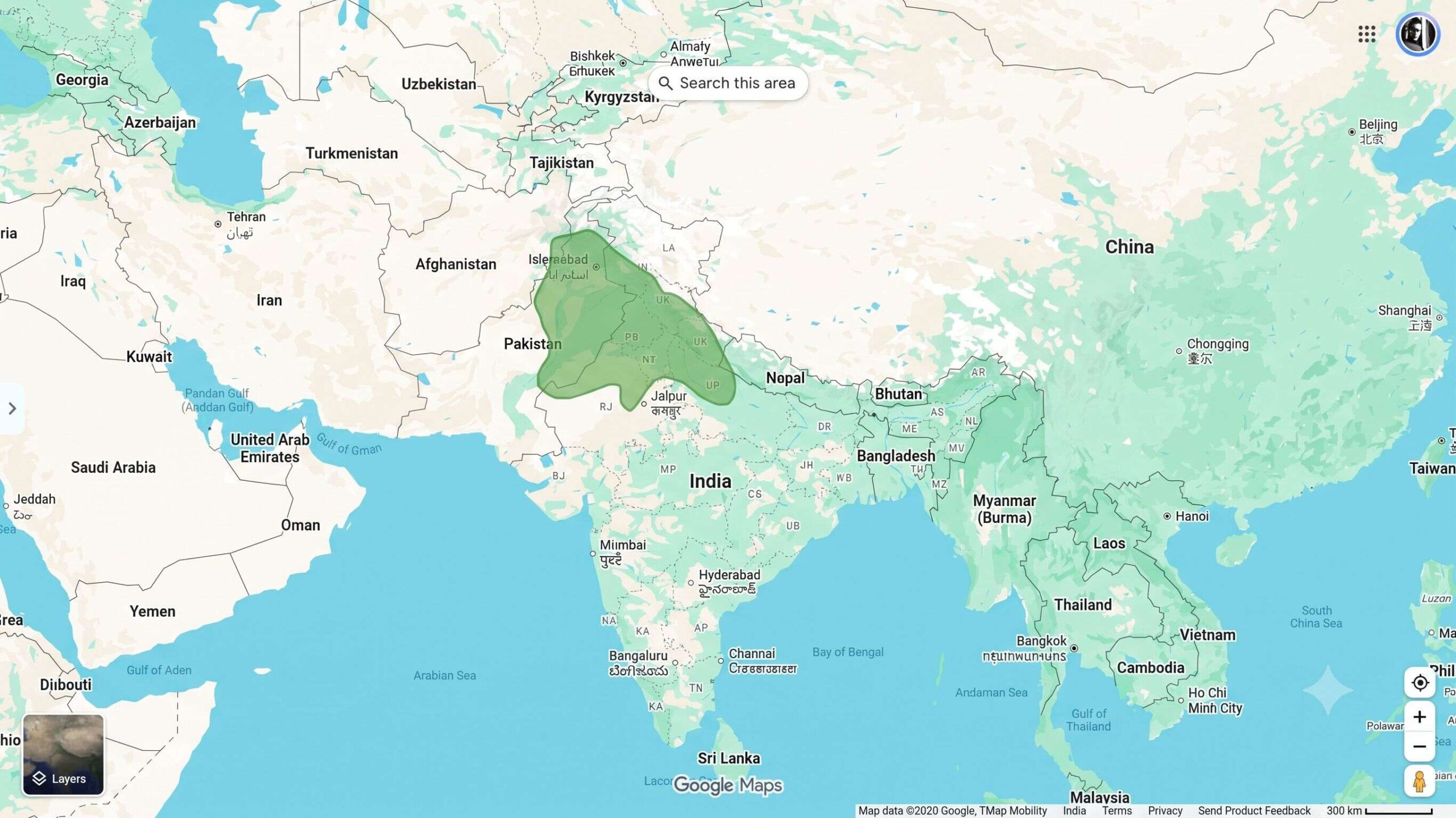
The Sayyid dynasty governed a considerably smaller territory than the Delhi Sultanate had controlled during its earlier periods of expansion. Its effective authority was concentrated around Delhi, and control over neighbouring districts frequently depended on military expeditions, tribute arrangements and the cooperation of local chiefs.
Core regions and important centres
Region | Important centres | Historical significance |
|---|---|---|
Delhi and its immediate surroundings | Delhi | The dynasty’s capital and principal centre of administration. |
Ganga–Yamuna Doab | Etawah, Kannauj and neighbouring districts | An important agricultural and revenue-producing region, although local chiefs frequently resisted Delhi’s authority. |
Haryana and the northwestern approaches to Delhi | Rohtak and surrounding areas | Important for securing the approaches to the capital and maintaining control over nearby territories. |
Punjab | Lahore, Dipalpur and Multan | Associated with Khizr Khan’s earlier political and military base. The degree of control varied, particularly as Bahlul Lodi rose to power. |
Rohilkhand and Katehr | Katehr and surrounding settlements | A region where local rulers resisted central authority and where the Sayyids periodically attempted to collect tribute. |
Mewat | Mewat and its surrounding strongholds | A strategically important area south of Delhi where local chiefs challenged the Sultanate’s authority. |
Badaun | Badaun | An important town outside Delhi; Alam Shah withdrew there before the dynasty’s final displacement. |
Important qualification: These areas did not necessarily remain under uninterrupted, direct administration throughout 1414–1451. The dynasty’s reach changed over time, and some places were controlled only intermittently or through tribute relationships.
Regions outside effective Sayyid control
Several important regional states operated independently during the Sayyid period:
- Bengal: Governed by its own ruling dynasty.
- Gujarat: Established as an independent sultanate.
- Malwa: Controlled by the Malwa Sultanate.
- Jaunpur: Ruled by the Sharqi dynasty, a major rival of Delhi.
- The Deccan: Dominated by regional powers, including the Bahmani Sultanate.
- Much of Rajasthan: Divided among regional kingdoms and local ruling houses.
These states should not be included as regular provinces of the Sayyid dynasty simply because they had been conquered or claimed by earlier Delhi Sultanate rulers.
The Lodi Dynasty (1451–1526 CE)
Introduction
The Lodi dynasty, also spelled Lodhi, was the fifth and final ruling dynasty of the Delhi Sultanate, governing much of northern India from 1451 to 1526 CE. It was the first Afghan dynasty to rule the Delhi Sultanate and belonged to the Lodi tribe, traditionally associated with the Afghan or Pashtun peoples. The Lodis originated from the Afghan tribal communities of the region around Afghanistan and the adjoining northwestern frontier, and members of these communities had entered the military and political service of earlier Delhi Sultanate rulers. The dynasty was founded by Bahlul Lodi, a powerful Afghan noble who established his authority in Punjab before taking control of Delhi. The Lodi period saw the restoration of some of the Sultanate’s political influence, the development of Agra as an important administrative centre, and distinctive developments in Indo-Islamic architecture. The dynasty ultimately fell to Babur’s invading army in 1526, marking the end of the Delhi Sultanate’s independent ruling dynasties and the beginning of Mughal rule.
How the Lodis Seized Power from the Sayyid Dynasty
By the mid-fifteenth century, the Sayyid dynasty had become politically weak, with limited territorial control and difficulties maintaining authority over regional chiefs. Its last ruler, Ala al-Din Alam Shah, withdrew from Delhi to Badaun rather than continue ruling from the capital. Bahlul Lodi, an influential Afghan noble and governor associated with Punjab, took advantage of this situation. In 1451 CE, he assumed control of Delhi and founded the Lodi dynasty, ending Sayyid rule. The transition consolidated the growing influence of Afghan military elites in northern Indian politics.
Rulers of the Lodi Dynasty
Reigning period | Ruler | Key significance during the reign |
|---|---|---|
1451–1489 CE | Bahlul Lodi | Founder of the dynasty. Strengthened the Sultanate’s position in northern India, maintained alliances with Afghan nobles and eventually brought the Jaunpur Sultanate under Delhi’s authority. |
1489–1517 CE | Sikandar Lodi | The dynasty’s most effective administrator and consolidator. Expanded eastward, brought Bihar under greater influence, founded Agra as an important city in 1504 and introduced measures to improve revenue administration. |
1517–1526 CE | Ibrahim Lodi | Last ruler of the dynasty. Attempted to strengthen central royal authority but alienated powerful Afghan nobles. Faced internal rebellions and was defeated and killed by Babur at the First Battle of Panipat in 1526. |
Key Achievements and Reforms
Restoration of the Delhi Sultanate: Bahlul Lodi strengthened the Sultanate after the political fragmentation of the Sayyid period and extended its authority over neighbouring territories.
Conquest of Jaunpur: Bahlul fought a prolonged struggle against the Sharqi rulers of Jaunpur. Its eventual incorporation into the Delhi Sultanate substantially increased the dynasty’s influence in the eastern Gangetic plain.
Cooperation with Afghan nobles: Bahlul maintained relations with powerful Afghan chiefs through negotiation and political accommodation. His approach helped secure support from the military aristocracy, although it also limited the monarchy’s ability to exercise completely independent authority.
Administrative consolidation: Sikandar Lodi strengthened government institutions, improved revenue administration and worked to increase the central government’s influence over provincial officials.
Foundation of Agra: Sikandar Lodi established Agra as an important urban and administrative centre around 1504 CE. The city subsequently became one of the most important political centres of the Mughal Empire.
Land measurement and revenue assessment: Sikandar is associated with the Gaj-i-Sikandari, a standardized unit of land measurement intended to support more systematic agricultural assessment and revenue collection.
Agricultural and commercial development: The dynasty’s rulers sought to secure agricultural revenues, maintain important trade routes and strengthen the economic foundations of their territories.
Indo-Islamic architecture: The Lodis developed a distinctive architectural style characterized by domed tombs, garden settings, octagonal plans and comparatively restrained decoration. Notable surviving examples include the tombs of Sikandar Lodi and other Sultanate-era nobles in present-day Delhi.
Patronage of learning: Persian remained important in administration and court culture, while the period also saw the continued development of literary and religious traditions across northern India.
Expansion of Afghan political influence: The Lodi period strengthened the position of Afghan military and political elites, whose influence became a defining feature of the dynasty’s government.
These developments helped restore the Delhi Sultanate’s regional importance, particularly under Bahlul and Sikandar. However, the political structure continued to depend heavily on cooperation between the Sultan and powerful nobles.
Downfall of the Lodi Dynasty
The decline of the Lodi dynasty accelerated during Ibrahim Lodi’s reign. Unlike his predecessors, Ibrahim attempted to impose stronger central control over the Afghan nobility, provoking resistance from powerful chiefs and provincial governors. Rebellions and factional conflicts weakened the Sultanate, while Daulat Khan Lodi, the governor of Punjab, and other opponents became involved in inviting Babur, the ruler of Kabul, to intervene in northern India. Babur invaded with an army that made effective use of field artillery, firearms and coordinated military tactics. On 21 April 1526, Babur defeated Ibrahim Lodi at the First Battle of Panipat. Ibrahim was killed in the battle, bringing the Lodi dynasty and the Delhi Sultanate’s succession of independent ruling dynasties to an end. Babur subsequently established Mughal rule in northern India.
Regions Under the Lodi Dynasty
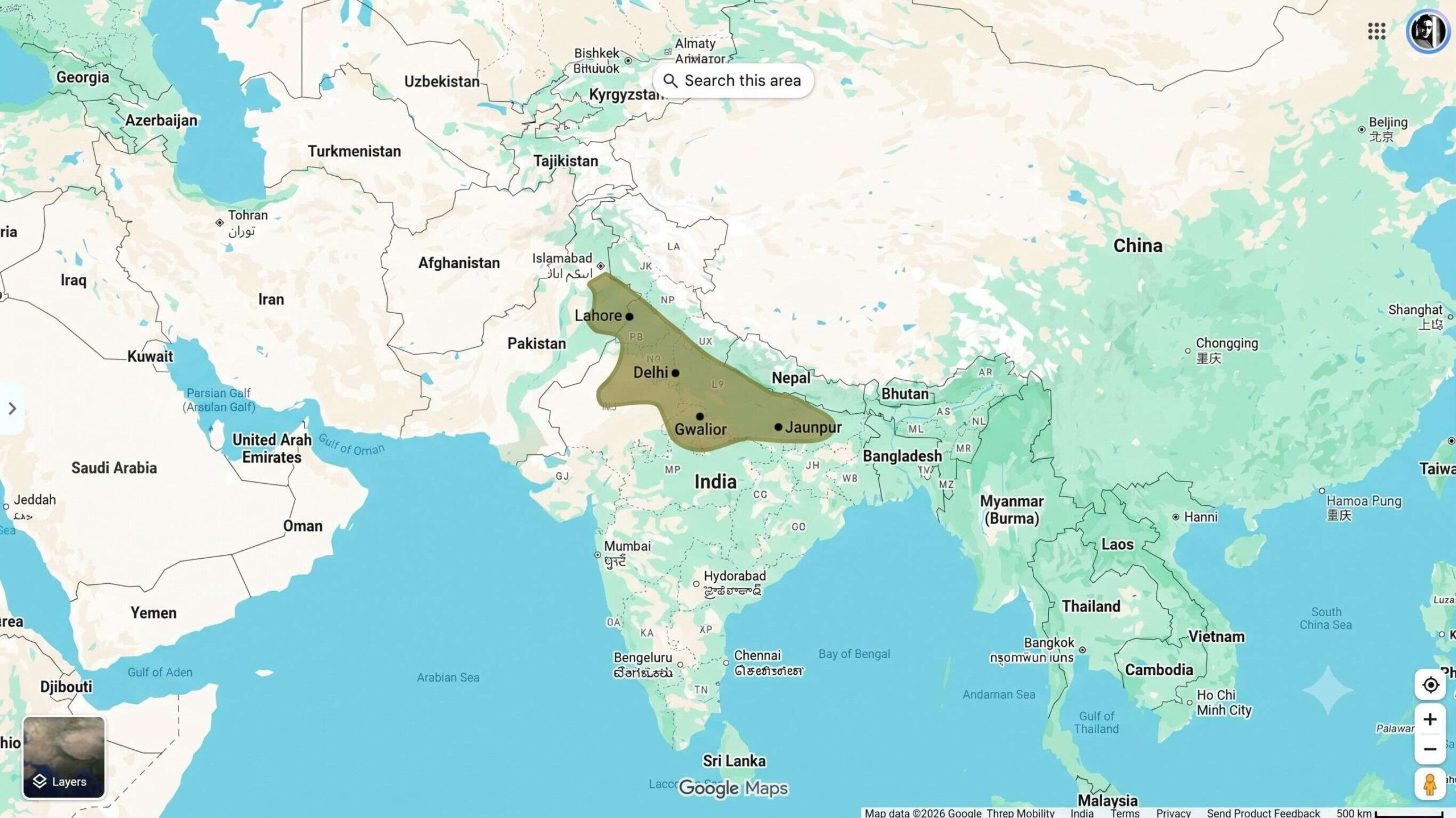
The Lodi dynasty controlled much of northern India, but its territorial reach changed throughout its 75-year history. Bahlul Lodi expanded the Sultanate from its northwestern base, Sikandar Lodi consolidated and extended its influence eastward, and Ibrahim Lodi faced increasing challenges to central authority.
Core regions and important centres
Region | Important centres | Historical significance |
|---|---|---|
Delhi and the surrounding heartland | Delhi | The principal capital and central administrative centre of the dynasty. |
Punjab | Lahore, Dipalpur, Sirhind | Bahlul Lodi’s political and military base before his accession; strategically important for frontier defence and communication with Afghanistan. |
Ganga–Yamuna Doab | Etawah, Kannauj and surrounding districts | An agriculturally productive region and an important source of state revenue. |
Jaunpur and eastern Uttar Pradesh | Jaunpur, Varanasi and neighbouring territories | Brought under Delhi’s authority following Bahlul Lodi’s campaigns against the Sharqi dynasty. |
Bihar | Important settlements in the middle Gangetic region | Came increasingly under Lodi influence, particularly during Sikandar Lodi’s reign, although the degree of control varied. |
Agra and adjoining territories | Agra, Mathura and surrounding areas | Agra became a major administrative centre under Sikandar Lodi and later an important Mughal capital. |
Rajasthan and adjoining frontier areas | Bayana and neighbouring strongholds | Contested territories where the Sultanate sought to maintain strategic positions and influence over local rulers. |
Mewat | Mewat and surrounding settlements | A strategically important area south of Delhi where local chiefs periodically resisted Sultanate authority. |
Central Indian frontier | Kalpi and neighbouring territories | A zone of military competition and shifting political influence between the Delhi Sultanate and regional powers. |
Regions outside direct Lodi administration
Several major regional states remained independent of the Lodi dynasty or operated beyond its effective control:
- Bengal: Governed by its own independent sultanate.
- Gujarat: Ruled by the Gujarat Sultanate.
- Malwa: Controlled by the Malwa Sultanate.
- Mewar and other Rajput territories: Governed by regional Rajput ruling houses.
- The Deccan: Dominated by regional powers, including the Bahmani Sultanate and its successor states.
- Kashmir: Governed by its own sultans.
The Lodis sometimes conducted military campaigns or maintained diplomatic relations with neighbouring powers, but these activities should not be confused with permanent territorial annexation.
Historical qualification: The Lodi dynasty did not control all of northern India uniformly. Its strongest authority lay around Delhi, Punjab and the upper Gangetic plain, while control over frontier districts depended on military strength, local alliances and the cooperation of regional chiefs.
