
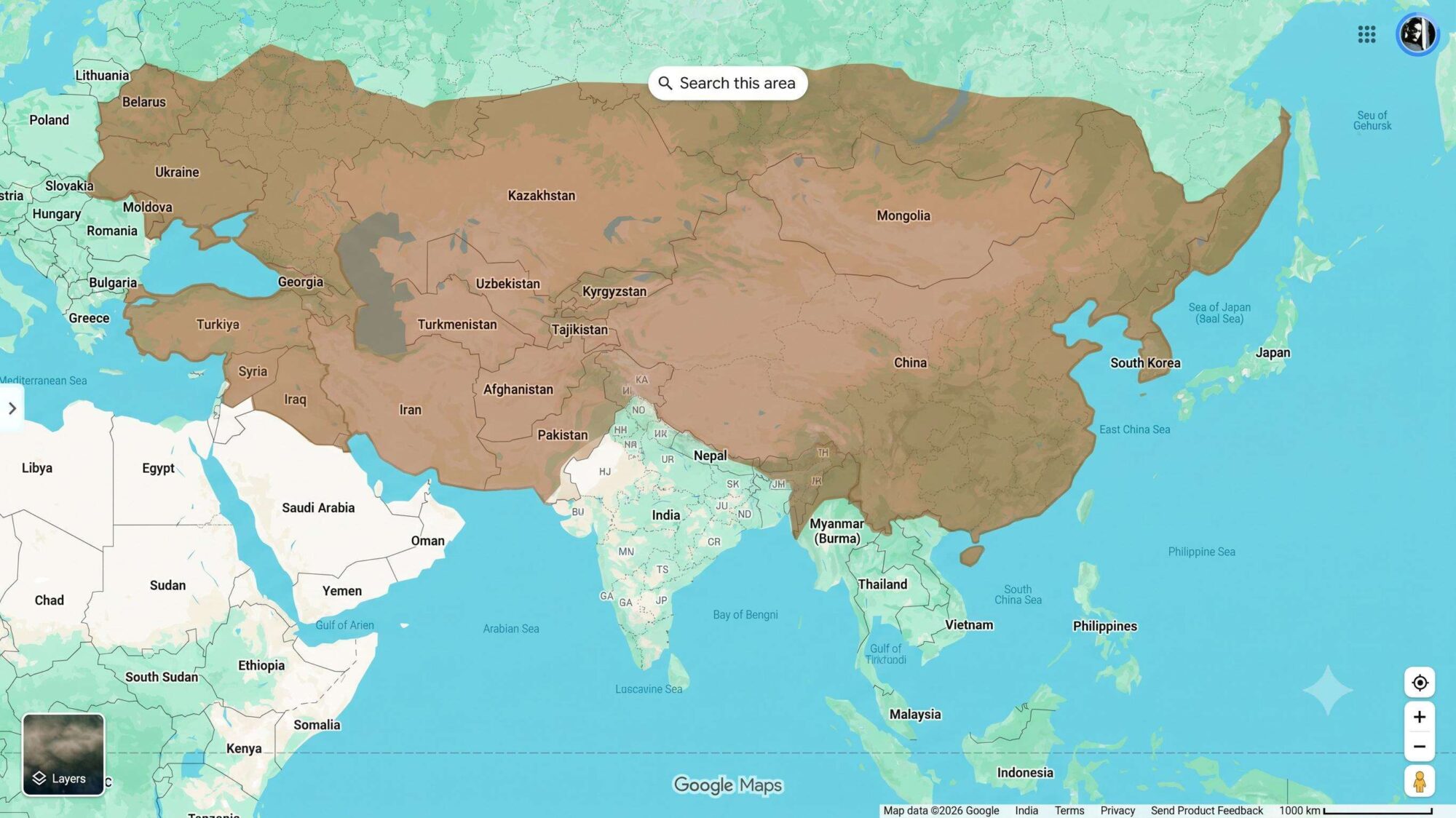
The Mongol Empire, founded by Genghis Khan in 1206, expanded across the 13th and 14th centuries to become the largest contiguous land empire in human history. Utilizing disciplined cavalry tactics, sophisticated psychological warfare, and meritocratic organization, the Mongols conquered vast territories stretching from the Sea of Japan and the Pacific coast through China, Central Asia, and the Middle East all the way into Eastern Europe. At its height under rulers like Kublai Khan, the empire oversaw the Pax Mongolica—an era of relative stability that revitalized trans-Eurasian trade routes, particularly the Silk Road, and spurred unprecedented exchanges of commerce, technology, science, and cultural ideas between East and West. Although succession disputes ultimately fractured the realm into four distinct khanates—the Golden Horde, the Chagatai Khanate, the Ilkhanate, and the Yuan Dynasty—the empire’s administrative networks, diplomatic connections, and integration of Eurasian trade left an enduring impact on global history.

East Asia
- Mongolia
- China (including parts of Inner Mongolia, Tibet, and Western China)
- North Korea and South Korea (Goryeo)
Central Asia
- Kazakhstan
- Uzbekistan
- Kyrgyzstan
- Turkmenistan
- Tajikistan
- Afghanistan
Middle East & Caucasus
- Iran
- Iraq (including the fall of Baghdad)
- Azerbaijan
- Armenia
- Georgia
- Syria (parts)
- Turkey (Anatolian regions)
South Asia (Partial Invasions & Raids)
- Pakistan (western/northern frontier regions)
- India (northern border raids; never fully conquered)
Eastern & Central Europe
- Russia (Kievan Rus’ and various principalities)
- Ukraine
- Belarus
- Poland (parts)
- Hungary
- Romania (Wallachia and parts)
- Bulgaria
- Moldova
- Lithuania (parts/raids)
Southeast Asia (Invasions & Tributary States)
- Myanmar (Burma)
- Vietnam (Đại Việt – invaded and made tributary)
- Laos
- Thailand (northern principalities influenced)
- Cambodia
The Fracture and Dissolution of the Mongol Empire
The Mongol Empire did not collapse overnight. After Kublai Khan died in 1294, the Mongol Empire permanently fractured into four separate, independent realms—the Yuan Dynasty in China and Mongolia, the Golden Horde in Russia/Eastern Europe, the Ilkhanate in the Middle East, and the Chagatai Khanate in Central Asia.. Without a strong central authority, these successor states were weakened by internal civil wars, dynastic succession disputes, and the devastating impact of the Black Death. Over the 14th century, these successor khanates gradually assimilated into their local populations, adopted indigenous religions like Islam and Buddhism, and faced catastrophic economic shocks and demographic decline exacerbated by the Black Death. Indigenous uprisings and new regional powers eventually dismantled each remnant: the Ilkhanate disintegrated into local dynasties by the 1330s, the native Ming Dynasty overthrew the Yuan in 1368, and the rising Grand Duchy of Moscow broke the Golden Horde’s grip at the Ugra River in 1480, bringing an end to pan-Eurasian Mongol supremacy pushing the remaining Mongols back into their traditional nomadic homelands.
Below is the chronological table of the rulers of the unified Mongol Empire and the primary Great Khans (Yuan Dynasty):
1. Unified Mongol Empire (Khagans / Great Khans)
| No. | Ruler Name | Reign Period | Estimated Land Area Under Reign |
| 1 | Genghis Khan (Temüjin) | 1206 – 1227 CE | ~13,500,000 km² (Unified nomadic tribes; conquered Jin northern territories, Western Xia, and Khwarazmian Empire) |
| 2 | Tolui Khan (Regent) | 1227 – 1229 CE | ~13,500,000 km² (Interregnum administration) |
| 3 | Ögedei Khan | 1229 – 1241 CE | ~19,000,000 km² (Destruction of Jin Dynasty; invasion of Rus’ principalities, Poland, and Hungary; founded Karakorum) |
| 4 | Töregene Khatun (Regent) | 1241 – 1246 CE | ~19,000,000 km² (Regency period preceding the election of Güyük) |
| 5 | Güyük Khan | 1246 – 1248 CE | ~19,500,000 km² (Consolidated Caucasian and Anatolian submissions) |
| 6 | Oghul Qaimish (Regent) | 1248 – 1251 CE | ~19,500,000 km² (Regency amidst dynastic succession disputes) |
| 7 | Möngke Khan | 1251 – 1259 CE | ~22,000,000 km² (Hulagu sacked Baghdad in 1258; campaigns against Song China; last universally accepted Great Khan) |
2. Peak Territorial Era & Fragmentation (Great Khans / Yuan Dynasty)
(Following Möngke’s death, Kublai claimed the title of Great Khan, formalizing the Yuan Dynasty while nominal authority over the western khanates steadily decentralized.)
| No. | Ruler Name | Reign Period | Estimated Land Area Under Reign |
| 8 | Kublai Khan | 1260 – 1294 CE | ~23,500,000 – 24,000,000 km² (Territorial peak of the empire; conquered Song Dynasty, unified China; founded Khanbaliq/Beijing) |
| 9 | Temür Khan (Emperor Chengzong) | 1294 – 1307 CE | ~14,000,000 – 15,000,000 km² (Direct Yuan realm; secured nominal peace and deference from western khanates) |
| 10 | Külüg Khan (Emperor Wuzong) | 1307 – 1311 CE | ~14,000,000 km² |
| 11 | Ayurbarwada Buyantu Khan (Emperor Renzong) | 1311 – 1320 CE | ~14,000,000 km² (Reintroduced imperial civil service examinations) |
| 12 | Gegeen Khan (Emperor Yingzong) | 1320 – 1323 CE | ~13,500,000 km² |
| 13 | Yesün Temür (Emperor Taiding) | 1323 – 1328 CE | ~13,500,000 km² |
| 14 | Ragibagh Khan & Jayaatu Khan Tug Temür | 1328 – 1332 CE | ~13,000,000 km² (Succession civil war) |
| 15 | Rinchinbal Khan (Emperor Ningzong) | 1332 CE | ~13,000,000 km² (Reigned for 53 days as a child) |
| 16 | Toghon Temür (Emperor Huizong) | 1333 – 1370 CE | ~12,000,000 km² → retreated to Mongolian steppe (Overthrown by the Ming Dynasty in 1368; established the Northern Yuan) |
