

The Greek Empire reached its zenith in the 4th century BCE under the leadership of King Philip II of Macedon and his son, Alexander the Great, who transformed a collection of fiercely independent city-states into one of the largest empires of the ancient world. Embarking on an unprecedented military campaign from 334 to 323 BCE, Alexander dismantled the Achaemenid Persian Empire and stretched Greek dominion across three continents—spanning from mainland Greece and the Balkans through Egypt, Mesopotamia, and the Iranian plateau all the way to the Indus River basin. Following Alexander’s sudden death at age thirty-two, the unified realm splintered among his top generals (the Diadochi), giving rise to rival Hellenistic dynasties such as the Ptolemaic Kingdom in Egypt and the Seleucid Empire in Asia. While politically fragmented, this era catalyzed the rapid diffusion of Hellenic culture, architecture, scientific inquiry, philosophy, and the Koine Greek language throughout the Near East and Mediterranean, laying enduring intellectual and cultural foundations that heavily shaped the subsequent Roman world and Western civilization.
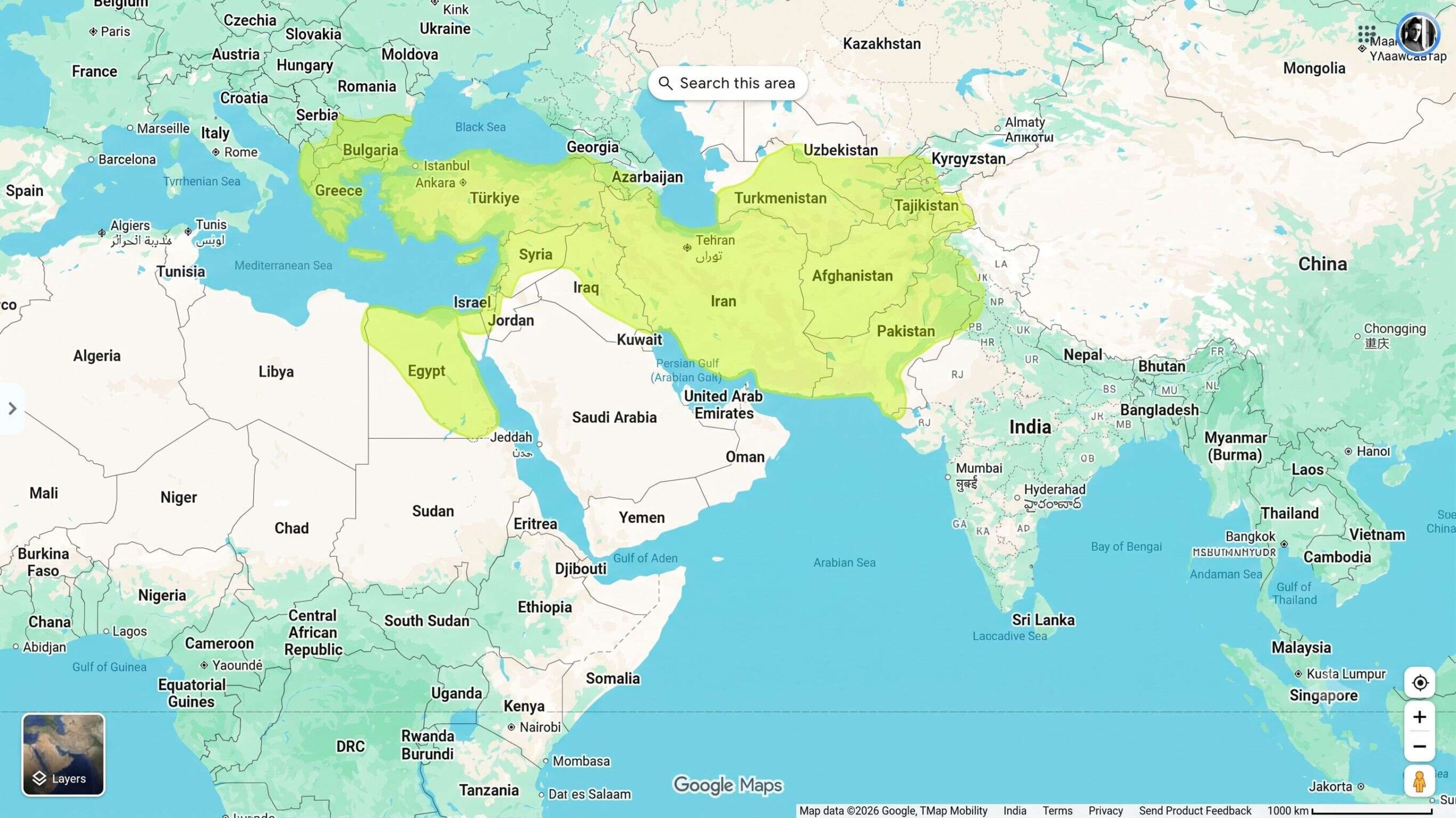
The “Greek Empire” at its peak territorial extent corresponds to the Argead Macedonian Empire built by Philip II and Alexander the Great, followed by its fragmentation into the rival Hellenistic Successor Kingdoms (Diadochi).
Prior to Philip II, ancient Greece was organized into independent, often warring city-states (poleis like Athens, Sparta, and Thebes) rather than a unified empire.
Below is the chronological table covering the rulers of the unified empire and the major Hellenistic dynasties that ruled its partitioned territories:
1. Unified Macedonian Empire (Argead Dynasty)
| No. | Ruler Name | Reign Period | Estimated Land Area Under Reign |
| 1 | Philip II of Macedon | 359 – 336 BCE | ~300,000 – 400,000 km² (Unified mainland Greece via the League of Corinth; Thrace) |
| 2 | Alexander III (The Great) | 336 – 323 BCE | ~5,200,000 – 5,400,000 km² (Peak; conquered Persian Empire from Greece to the Indus) |
| 3 | Philip III Arrhidaeus | 323 – 317 BCE | ~5,200,000 km² (Nominal joint ruler under imperial regents; Empire fracturing) |
| 4 | Alexander IV | 323 – 309 BCE | ~5,200,000 km² → fragmented (Posthumous son; murdered by Cassander, ending Argead dynasty) |
2. Imperial Regents (Chiliarchs / Protectors of the Whole Empire)
| No. | Ruler / Regent Name | Regency Period | Estimated Territory Controlled / Influenced |
| 5 | Perdiccas | 323 – 321 BCE | ~5,000,000 km² (Struggled to hold empire together; killed in Egypt) |
| 6 | Antipater | 321 – 319 BCE | ~4,500,000 km² (Named supreme regent at Triparadisus partition) |
| 7 | Polyperchon | 319 – 316 BCE | ~1,500,000 km² (Lost control during the Wars of the Diadochi) |
3. Major Hellenistic Successor States (The Diadochi)
(Following the final partition of Alexander’s empire, four major Greek kingdoms emerged: the Seleucid Empire in Asia, Ptolemaic Egypt, the Antigonid Kingdom of Macedon, and the Kingdom of Pergamon/Lysimachus.)
A. Seleucid Empire (Near East, Mesopotamia, and Central Asia)
| No. | Ruler Name | Reign Period | Estimated Land Area Under Reign |
| 8 | Seleucus I Nicator | 305 – 281 BCE | ~3,500,000 – 3,900,000 km² (Largest successor state; Anatolia to Central Asia) |
| 9 | Antiochus I Soter | 281 – 261 BCE | ~3,400,000 km² |
| 10 | Antiochus II Theos | 261 – 246 BCE | ~3,000,000 km² (Bactria and Parthia began seceding) |
| 11 | Seleucus II Callinicus | 246 – 225 BCE | ~2,500,000 km² |
| 12 | Antiochus III (The Great) | 222 – 187 BCE | ~3,200,000 km² (Restored eastern satrapies; clashed with Rome) |
| 13 | Antiochus IV Epiphanes | 175 – 164 BCE | ~1,800,000 km² (Maccabean Revolt; Roman ultimatum in Egypt) |
| 14 | Antiochus VII Sidetes | 138 – 129 BCE | ~800,000 km² (Last serious attempt to hold Babylonia against Parthia) |
| 15 | Antiochus XIII Asiaticus | 69 – 64 BCE | ~50,000 km² → 0 km² (Syria annexed as a Roman province by Pompey) |
B. Ptolemaic Empire (Egypt, Cyrenaica, and the Levant)
| No. | Ruler Name | Reign Period | Estimated Land Area Under Reign |
| 16 | Ptolemy I Soter | 305 – 282 BCE | ~900,000 – 1,000,000 km² (Founded Ptolemaic dynasty; capital at Alexandria) |
| 17 | Ptolemy II Philadelphus | 284 – 246 BCE | ~1,200,000 km² (Ptolemaic peak; annexed Aegean islands, coastal Anatolia) |
| 18 | Ptolemy III Euergetes | 246 – 222 BCE | ~1,200,000 km² |
| 19 | Ptolemy IV Philopator | 221 – 204 BCE | ~1,000,000 km² (Defeated Antiochus III at Raphia) |
| 20 | Ptolemy V Epiphanes | 204 – 180 BCE | ~800,000 km² (Rosetta Stone era; lost Coele-Syria) |
| 21 | Cleopatra VII Philopator | 51 – 30 BCE | ~900,000 km² → 0 km² (Last Hellenistic monarch; Egypt annexed by Octavian/Augustus) |
C. Antigonid Dynasty (Macedon and Mainland Greece)
| No. | Ruler Name | Reign Period | Estimated Land Area Under Reign |
| 22 | Antigonus I Monophthalmus | 306 – 301 BCE | ~1,800,000 km² (Peak before defeat at Battle of Ipsus) |
| 23 | Demetrius I Poliorcetes | 294 – 288 BCE | ~250,000 – 300,000 km² |
| 24 | Antigonus II Gonatas | 277 – 239 BCE | ~250,000 – 300,000 km² (Firmly established Antigonid control over Greece) |
| 25 | Philip V | 221 – 179 BCE | ~250,000 km² (Fought First and Second Macedonian Wars against Rome) |
| 26 | Perseus of Macedon | 179 – 168 BCE | ~200,000 km² → 0 km² (Defeated at Battle of Pydna; ended Macedonian independence) |
The Fragmentation and Fall to Rome
The Greek Empire ended primarily because it failed to remain unified after the sudden death of Alexander the Great in 323 BCE. With no clear heir, Alexander’s top generals fought a series of brutal civil wars—known as the Wars of the Diadochi—which shattered his vast realm into competing Hellenistic kingdoms, most notably the Antigonid Dynasty in Greece and Macedon, the Seleucid Empire in the Near East, and the Ptolemaic Kingdom in Egypt. Decades of mutual conflict, civil unrest, and economic exhaustion steadily drained these successor states of their strength, leaving them vulnerable to outside powers. In the east, the rising Parthian Empire reclaimed Persia and Mesopotamia from the Seleucids, while from the west, the expanding Roman Republic systematically annexed the Greek world piece by piece. Rome conquered Macedon and mainland Greece by 146 BCE, absorbed the remnants of the Seleucid Empire in 64 BCE, and finally extinguished the last independent Greek Hellenistic dynasty in 30 BCE with the defeat of Cleopatra VII and the Roman conquest of Ptolemaic Egypt.
