

What happened to the apostles' lives after Jesus called them?
Jesus did not call all his disciples in precisely the same circumstances. Some left their occupations immediately, while the Bible does not tell us whether every apostle permanently abandoned his previous work.

Peter and Andrew
They were fishing when Jesus called them. Matthew 4:18–20 says they left their nets and followed him. Peter’s family life was not entirely disconnected from the group: Mark 1:29–31 describes Jesus visiting Peter and Andrew’s house and healing Peter’s mother-in-law.

James and John
They were working with their father Zebedee and hired workers when Jesus called them. Mark 1:19–20 says they left their father in the boat and followed Jesus. The reference to hired workers suggests their family fishing operation had some resources, though we do not know what happened to the business afterward.
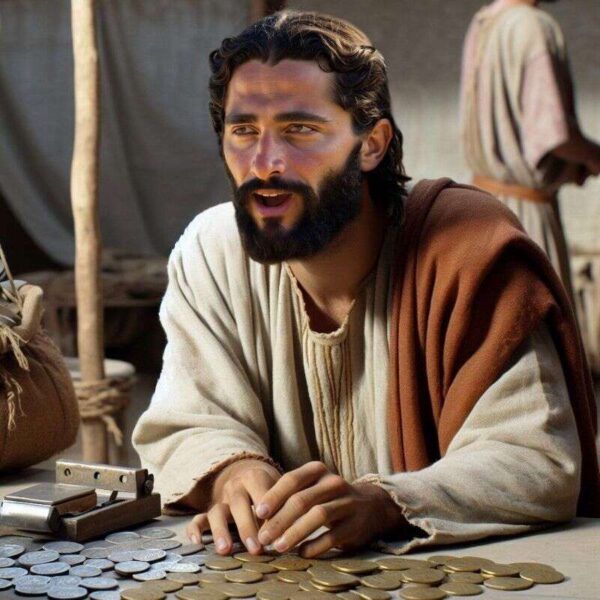
Matthew
Matthew 9:9 describes Jesus calling him while he was sitting at a tax booth. Matthew got up and followed Jesus. The text does not explain whether he retained any financial interests or how his household was supported afterward.
These accounts indicate that following Jesus could mean leaving familiar work and accepting a substantially different way of life. But they do not prove that every apostle never worked again.
In fact, after Jesus’ resurrection, Peter tells the others, “I am going fishing” (John 21:3). Several disciples join him. This demonstrates that fishing remained part of their lives after Jesus’ death, although it does not establish exactly how often Peter returned to fishing during Jesus’ ministry.
Did the apostles follow Jesus all the time?
During Jesus’ active ministry, the Twelve travelled with him for much of the time, but the Gospels do not establish that every apostle accompanied him every day.
Jesus’ ministry was itinerant: he travelled between towns and villages, teaching in synagogues, preaching, healing people, and visiting homes. Galilee was a major setting for this work, with later journeys taking him to Samaria, Judea, and Jerusalem.
The Gospels give us several clues about how their lives worked:
- They travelled together: Mark 3:14 says Jesus appointed the Twelve to be with him and to be sent out to preach.
- They stayed in people’s homes: Jesus visited Peter’s home in Capernaum (Mark 1:29–31), and he accepted hospitality in other towns.
- They sometimes travelled without Jesus: Jesus sent the Twelve out in pairs to preach and heal (Mark 6:7–13).
- They returned to report their activities: Luke 9:10 describes the apostles returning and telling Jesus what they had done.
- They sometimes went back to familiar activities: John 21 records several disciples fishing after the resurrection. The Gospels do not provide a complete account of whether or when they resumed their occupations during Jesus’ earlier ministry.
We should therefore picture them not as people who necessarily lived in one permanent camp, but as a travelling religious group whose movements depended on preaching, local hospitality, and the needs of the people they encountered.
How were their & their families expenses met?
This is one of the most important unanswered questions. The Bible gives us some evidence about financial support for Jesus’ travelling group, but it does not provide a household budget for each apostle.
A. Women financially supported Jesus and his companions
Luke 8:1–3 gives us the clearest direct evidence. It names Mary Magdalene, Joanna, and Susanna, along with other women, who supported Jesus and his companions from their own resources.
Joanna is identified as the wife of Chuza, an official in Herod’s household. Mary Magdalene and Susanna are not given comparable occupational details in this passage.
These women were not merely incidental figures in the narrative. Their financial contribution helped sustain the travelling ministry. Scholars differ on the precise social and economic circumstances of each woman, but the passage explicitly establishes that women provided material support.
B. Hospitality from local people
The Gospels also describe Jesus and his followers receiving hospitality from households and communities.
Martha welcomed Jesus into her home (Luke 10:38–42).
Jesus stayed with Zacchaeus (Luke 19:1–10).
He instructed his messengers to accept hospitality in towns where people welcomed them (Luke 10:5–8).
Such hospitality could provide food and accommodation, reducing the need to pay for every meal and overnight stay.
C. The group’s shared money
John 12:4–6 identifies Judas Iscariot as the keeper of the group’s money bag. This indicates that the group had funds under some form of shared management.
In John 13:29, some disciples think Jesus is telling Judas to buy what was needed for the festival or give something to the poor. This suggests that purchasing supplies was part of the group’s practical activities.
However, the Bible does not tell us precisely how much money they had, who contributed what proportion, or whether donations were their only source of income.
D. What about the apostles’ wives, children and parents?
The New Testament does not provide enough information to reconstruct the household finances of all twelve apostles.
We know that Peter had a mother-in-law (Mark 1:30), which indicates that he had a wife or had previously been married. Paul later refers to the right of apostles, including Cephas, to travel with a believing wife (1 Corinthians 9:5).
But we should not conclude that every apostle was married, that every apostle had children, or that their families were all financially dependent on donations.
The historically responsible conclusion: Jesus’ travelling ministry received support from women with financial resources, hospitality from local households, and a shared money fund. How each apostle’s family managed financially while he travelled remains largely undocumented.
What were the apostles' daily duties?
Jesus did not merely gather twelve people to listen to his teachings. He trained them to participate in his mission.
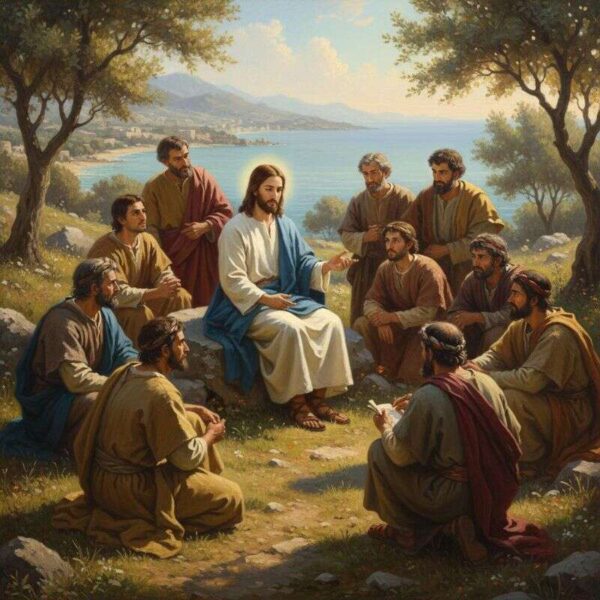
Learning from Jesus
They listened to his teachings, asked questions, and received explanations of parables. Mark 4:10–11 describes Jesus explaining certain teachings privately to his followers.
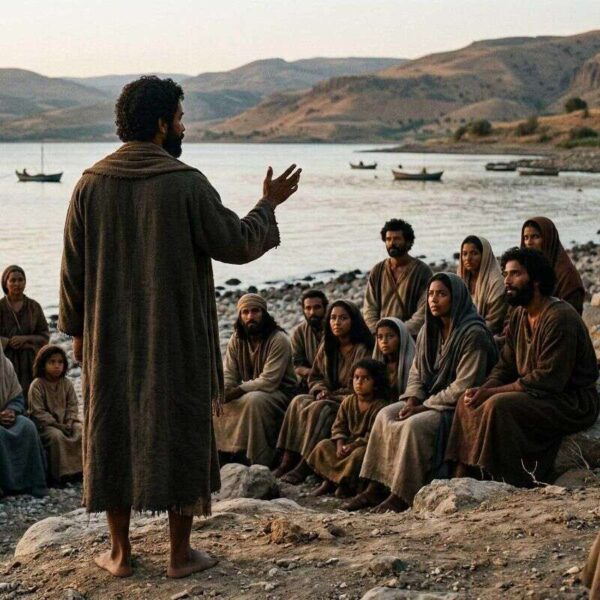
Preaching and healing
Jesus sent the Twelve out to proclaim the message, heal the sick, and call people to repentance (Mark 6:7–13; Luke 9:1–6).

Practical arrangements
They obtained food, travelled between settlements, accepted hospitality, and managed shared money. John 4:8 specifically says the disciples had gone into town to buy food.

Helping people and assisting Jesus
During the feeding of the five thousand, the disciples distributed food to the crowd (Mark 6:35–44). They also brought questions and concerns from people to Jesus and helped organize gatherings.
What was life with Jesus actually like?
The Gospels reveal a life that was often physically demanding, socially active, and unpredictable.
Travel and accommodation
Jesus and his followers travelled on foot through towns, villages, and rural areas. Their journeys could involve long distances, heat, fatigue, and the challenge of finding food and somewhere to stay. They did not have modern transport, hotels, or organized travel services.
Some nights they stayed with hosts; at other times, the Gospels describe Jesus withdrawing to solitary places to pray (Luke 5:16). The precise sleeping arrangements of the entire group are rarely recorded.
Meals and ordinary activities
Meals were important social occasions. Jesus ate with his disciples, accepted invitations from other households, and attended gatherings where his teachings often sparked discussion.
The disciples also had to obtain food. John 4:8 provides a particularly useful detail: when Jesus spoke with the Samaritan woman, his disciples had gone away to buy provisions.
Mark 6:31 records Jesus telling the disciples to come away to a quiet place and rest after their work. This suggests that their ministry involved periods of activity followed by a need for rest, rather than constant public teaching.
Conflict, danger and uncertainty
Their lives were not always peaceful. Jesus encountered opposition from some religious authorities, and the disciples sometimes faced hostile crowds or dangerous situations.
They also struggled to understand Jesus’ teachings. The Gospels describe arguments among them about who was greatest (Mark 9:33–35), fear during a storm (Mark 4:35–41), and confusion about Jesus’ predictions of his death.
Their life together was therefore not simply a continuous sequence of miracles and celebrations. It included practical difficulties, disagreements, fear, learning, and changing expectations.
Was Jesus a carpenter who worked with his father?
The New Testament identifies Jesus as a tekton, traditionally translated as “carpenter.” However, the Greek word can refer more broadly to a builder or craftsman.
Mark 6:3 calls Jesus a tekton, while Matthew 13:55 describes him as the son of a tekton. Joseph, whom the Gospels identify as Jesus’ earthly father, is traditionally understood to have worked in this trade. The texts do not directly describe Jesus and Joseph working together on particular projects.
It is therefore reasonable to conclude that Jesus was associated with a building or craft occupation before his public ministry. It is plausible that he learned the trade through his family, but the Bible does not describe his apprenticeship, specific customers, earnings, or working schedule.
His occupation may also have involved more than woodworking. In first-century Galilee, builders and craftspeople could work with wood, stone, and other building materials. The precise range of Jesus’ own work remains unknown.
Did Jesus stop working when he began preaching?
The Gospels present Jesus as a travelling teacher during his public ministry, but they do not explicitly say when he last worked as a craftsman or whether he ever undertook paid work during that period.
We should distinguish the evidence from reasonable possibilities:
- Established by the text: Jesus was called a tekton (Mark 6:3).
- Strongly suggested by the Gospel setting: His public ministry involved extensive travel and teaching rather than a regular craft occupation.
- Not established: The exact date he stopped working, his earnings, or whether he continued occasional paid work.
The following is an illustrative reconstruction based on the activities recorded in the Gospels and the historical setting. It is not a documented daily schedule.
Part of the day | Possible activities | Biblical basis |
|---|---|---|
Early morning | Prayer, preparation for travel, or discussion with Jesus | Mark 1:35 |
Morning | Walking to another village, teaching, preaching, or visiting a synagogue | Mark 1:38–39 |
Midday | Rest, obtaining food, drinking water, and speaking with people | John 4:6–8 |
Afternoon | Teaching crowds, healing, answering questions, or helping with practical arrangements | Mark 6:35–44 |
Evening | Sharing a meal, staying with a host, or continuing discussions | Luke 24:28–32 |
Night | Sleeping in available accommodation or, on some occasions, withdrawing to a quiet place | Luke 6:12; Luke 9:58 |
The timing and sequence would have varied according to the location, the people they encountered, the length of their journey, and the demands of the ministry.
What can we confidently conclude?
The most defensible picture is that Jesus and his disciples formed a mobile religious teaching group supported by a combination of financial contributions, hospitality, and shared resources.
Some apostles left established occupations when Jesus called them. They then travelled, learned from him, preached, assisted with practical tasks, and gradually took on responsibilities of their own. Yet the evidence does not allow us to reconstruct every apostle’s employment history, family arrangements, finances, or daily timetable.
For deeper research, these are particularly useful sources:
